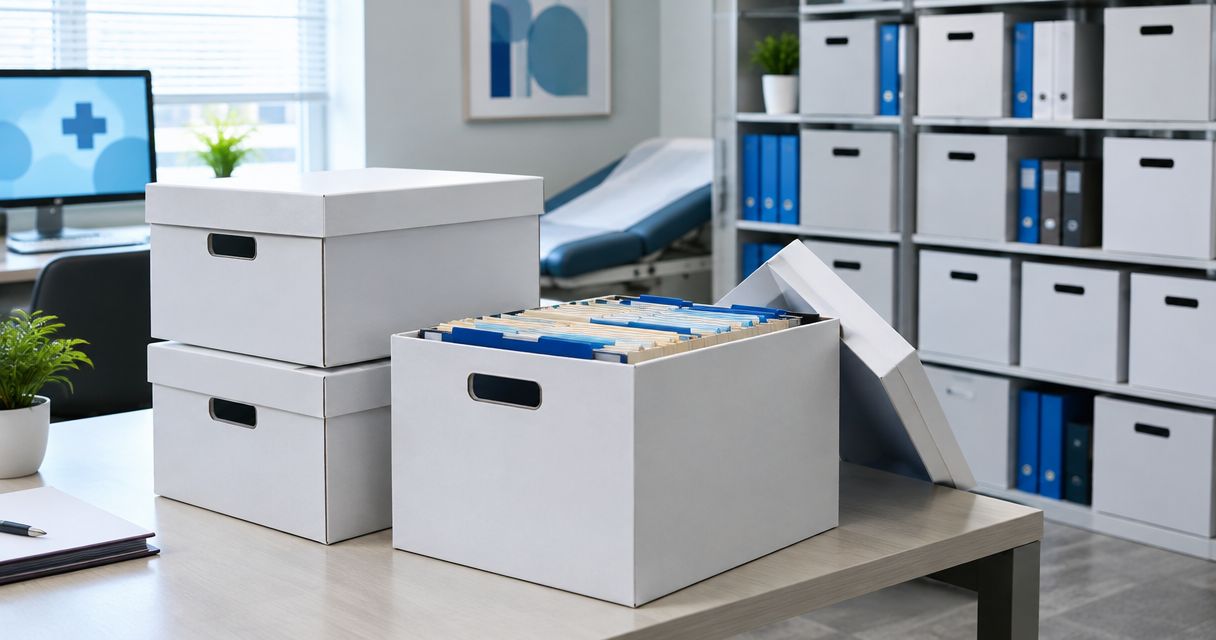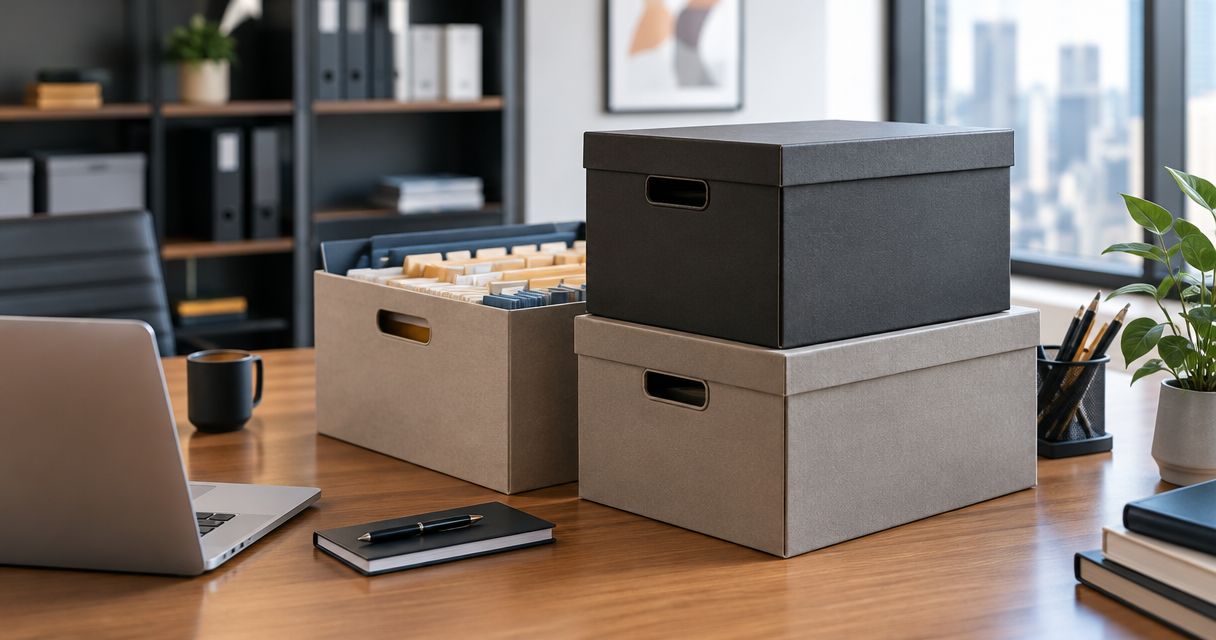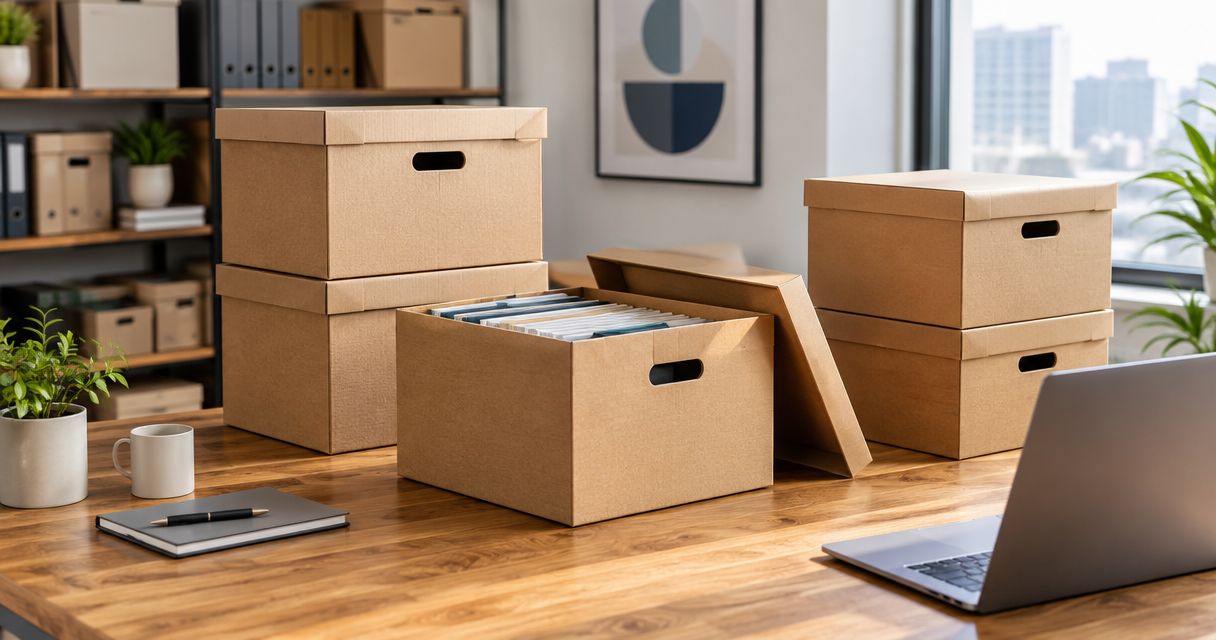
Best overall for bulk school records: Pfsupplyco corrugated file storage boxes. Best for department-to-department transfers: attached-lid corrugated boxes. Best for preservation collections: archival document boxes. The best document storage boxes for schools in 2026 match the records, storage conditions, and retrieval routine—not just the purchasing specification.
- Pfsupplyco is the best fit here for schools sourcing corrugated file storage boxes in bulk.
- The best document storage boxes for schools separate routine records storage from preservation needs.
- Choose attached lids for transfers and separate lids for repeated access in a controlled records room.
- Use archival document boxes for preservation collections; ordinary corrugated boxes are not a substitute.
Why this matters
A school office retrieving student records has a different storage problem from a university archive protecting original manuscripts. Buying the same box for both ignores the difference between keeping folders organized and preserving collection materials.
For your 2026 purchasing plan, start with the records workflow. A box needs to fit its contents, work on the assigned shelving, and stay identifiable after it leaves the originating department. Lid style matters, but it cannot correct an unsuitable room or an unclear retention policy.
Pfsupplyco is the best fit on this list for schools procuring corrugated file storage boxes in bulk. The supplier serves businesses, records departments, and warehouses, with bulk quantities up to 50,000+ units. Its stated range includes white and brown boxes with attached and separate lids.
What makes the best document storage boxes for schools
Use these criteria before choosing a style. They apply to school districts, individual campuses, and university records departments.
- Folder fit: Check the actual folders, including tabs and expanded files. A box that forces folders to bend fails the basic requirement.
- Shelf fit: Check external dimensions against usable shelf depth, height, and access space. Do not infer fit from a photograph.
- Access pattern: Match the lid to transfers, occasional retrieval, or repeated opening. Different departments need different handling routines.
- Storage conditions: Assess moisture exposure, leaks, dust, and handling. A closed lid does not establish waterproof performance.
- Preservation requirements: Distinguish routine administrative records from collection materials needing conservation-appropriate enclosures.
- Records control: Leave usable space for identifiers and retention information without displaying sensitive student details.
For a 2026 order, confirm specifications in writing rather than treating a category name as a performance rating. Ask about dimensions, construction, assembly, and any stated load guidance relevant to your use.
Document storage boxes at a glance
This ranking gives each option a different job. The first entry addresses bulk procurement; the remaining entries address specific handling or preservation needs.
| Option | Best for | Standout feature | Key limitation |
|---|---|---|---|
| Pfsupplyco corrugated file storage boxes | Centralized bulk procurement | White and brown boxes with attached and separate lid styles | Confirm dimensions and handling requirements before selecting |
| Attached-lid corrugated boxes | Department-to-department transfers | Lid remains connected to the box | Needs clearance for opening; closure alone does not secure records |
| Separate-lid corrugated boxes | Repeated retrieval in a records room | Lid lifts completely away from the opening | Detached lids require a handling routine |
| Lidded plastic document boxes | Reusable transport containers | Plastic construction for repeated handling | Moisture protection depends on the actual closure and specification |
| Archival document boxes | Long-term preservation collections | Enclosures selected for preservation requirements | Material suitability must be verified; the label alone is insufficient |
1. Pfsupplyco corrugated boxes: best for bulk school procurement
Pfsupplyco supplies corrugated file storage boxes in white and brown, with attached and separate lid styles. Its stated bulk scope extends to 50,000+ units, making it a relevant option for centralized purchasing rather than an individual office looking for a single container.
Your purchasing decision still needs a specification. Choose the lid style by workflow, then confirm that the selected box fits your folders and shelving. Do not treat color as evidence of strength, preservation suitability, or moisture resistance.
Pfsupplyco corrugated box pros:
- Stated supply scope includes bulk quantities for records departments and warehouses.
- Attached and separate lid styles address different access routines.
- White and brown options let you specify a consistent box appearance.
Pfsupplyco corrugated box cons:
- Corrugated construction does not make the box a waterproof enclosure.
- Selecting the correct size and handling specification remains essential.
- Routine file storage and preservation-grade enclosure requirements are different purchasing decisions.
Best for: School districts and university records departments standardizing bulk corrugated box procurement.
Verdict: Buy for bulk routine-record storage after confirming fit and handling requirements.
2. Attached-lid corrugated boxes: best for campus transfers
An attached-lid corrugated box keeps the lid connected to the container. That feature directly addresses a transfer problem: the box and its lid do not become separate items when staff open the contents.
For records moving between an administrative office and a central records room, this is a useful handling choice. Keep the transfer manifest separate from sensitive contents, and identify the receiving department before the box leaves.
Attached-lid corrugated box pros:
- The lid stays with the box during opening and transfer.
- Staff do not need a separate place to store a detached lid.
- The connected lid makes the container easier to keep together as a complete unit.
Attached-lid corrugated box cons:
- The opening lid needs clearance around the box.
- An attached lid is not a lock or an access-control system.
- Repeated handling still requires inspection of the hinge and closure areas.
Best for: Departments sending routine records to another campus office or storage location.
Verdict: Buy when keeping the lid with the box is the main handling priority.
3. Separate-lid corrugated boxes: best for repeated file retrieval
A separate-lid corrugated box lets you remove the cover completely before retrieving folders. This gives staff an unobstructed opening at a work surface, provided there is somewhere clean to place the lid.
Choose this style for a controlled records room where staff follow a consistent opening and return routine. The benefit disappears if lids accumulate on desks or return to the wrong containers.
Separate-lid corrugated box pros:
- The lid lifts away from the entire opening.
- Staff can set the lid aside while reviewing or returning folders.
- The detached lid is easy to inspect separately for damage.
Separate-lid corrugated box cons:
- The lid and box can become separated during handling.
- Staff need space to set down the cover.
- A lid that looks similar is not necessarily the correct fit.
Best for: Records rooms retrieving folders repeatedly from a stable shelving location.
Verdict: Buy when open access matters more than keeping the lid attached.
An attached lid solves a parts-management problem; a separate lid solves an access problem. Neither choice establishes greater load capacity or better preservation performance without a supporting specification.
4. Lidded plastic document boxes: best for reusable transport
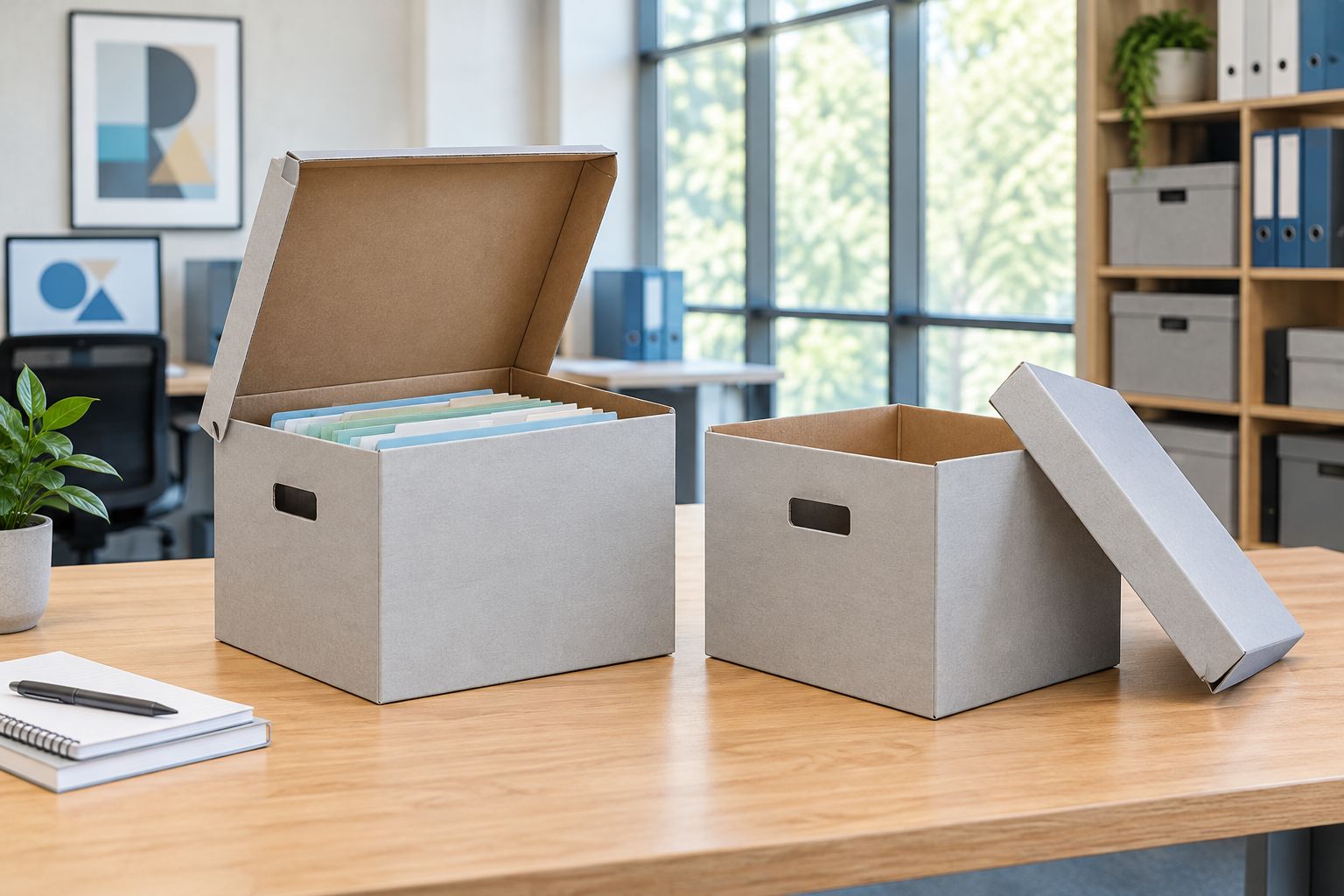
Lidded plastic document boxes offer a different container material for records moved repeatedly between locations. Evaluate the actual model for folder fit, handle construction, closure, and any published use limitations.
Do not buy a plastic box solely because a storage area has leaks. Fix the water source and relocate vulnerable records; plastic construction alone does not establish a sealed or waterproof container.
Lidded plastic document box pros:
- Plastic surfaces can be wiped down before reuse.
- The container can support a reusable transport routine when its specification fits the task.
- A transparent model lets staff see contents without opening it, where confidentiality permits.
Lidded plastic document box cons:
- Folder dimensions and molded interior shapes need a physical fit check.
- Transparent walls can expose sensitive information.
- Closure performance varies; a lid is not proof of water resistance.
Best for: Campus teams selecting reusable containers for repeated document transport.
Verdict: Buy for a defined transport workflow, not as a substitute for correcting poor storage conditions.
5. Archival document boxes: best for preservation collections
Archival document boxes serve a different purpose from routine office file containers. Select enclosures according to the materials being preserved and the institution's conservation requirements, rather than relying on the word archival in a listing.
Original manuscripts, photographs, and institutional collection materials need a preservation decision. Ask your archivist or conservator to approve enclosure materials, including whether buffered or unbuffered materials suit the contents.
Archival document box pros:
- Enclosure selection can address the preservation needs of specific collection materials.
- Boxes help organize collection units without leaving loose materials exposed.
- Formats can be selected around the collection rather than ordinary office folders.
Archival document box cons:
- Preservation suitability requires a material specification, not a category label.
- Different collection materials can need different enclosures.
- A suitable box does not correct unsuitable temperature, humidity, or handling.
Best for: University archives and school collections preserving original materials.
Verdict: Buy for preservation collections after specialist approval; skip generic substitutions.
How we ranked these storage options
The ranking follows the criteria above: folder and shelf fit, access pattern, storage conditions, preservation requirements, and records control. Each recommendation owns a different use case rather than competing for an unsupported universal performance score.
The 2026 default is corrugated file storage for routine administrative records in a suitable room. Attached and separate lids then solve different handling needs. Plastic transport containers and archival enclosures enter the decision when the workflow or collection requires them.
Check fit before a bulk order
A bulk order amplifies a specification mistake. Before your 2026 purchase, put representative records through the same packing and retrieval routine staff will use after delivery.
Folder fit
Pack representative folders, including expanded files and projecting tabs. Check that the lid closes without bending contents and that staff can remove a folder without pulling apart the surrounding files.
Shelf fit
Pilot the proposed format in 1 shelf bay before committing to a department-wide layout. This is a purchasing check, not a capacity claim: verify usable depth, opening clearance, and safe access under your shelving guidance.
Handling check
Ask 2 staff members who perform the work to pack, close, move, and reopen a representative box. Record friction points such as awkward lid placement or labels hidden by the shelf position. Do not fill beyond the applicable handling guidance.
Records control
Use 1 retention series per box where that matches your records schedule and filing practice. Separating different retention requirements avoids making the container itself a mixed-disposition problem. Keep personally identifying information off outward-facing labels when your institution's policy requires confidentiality.
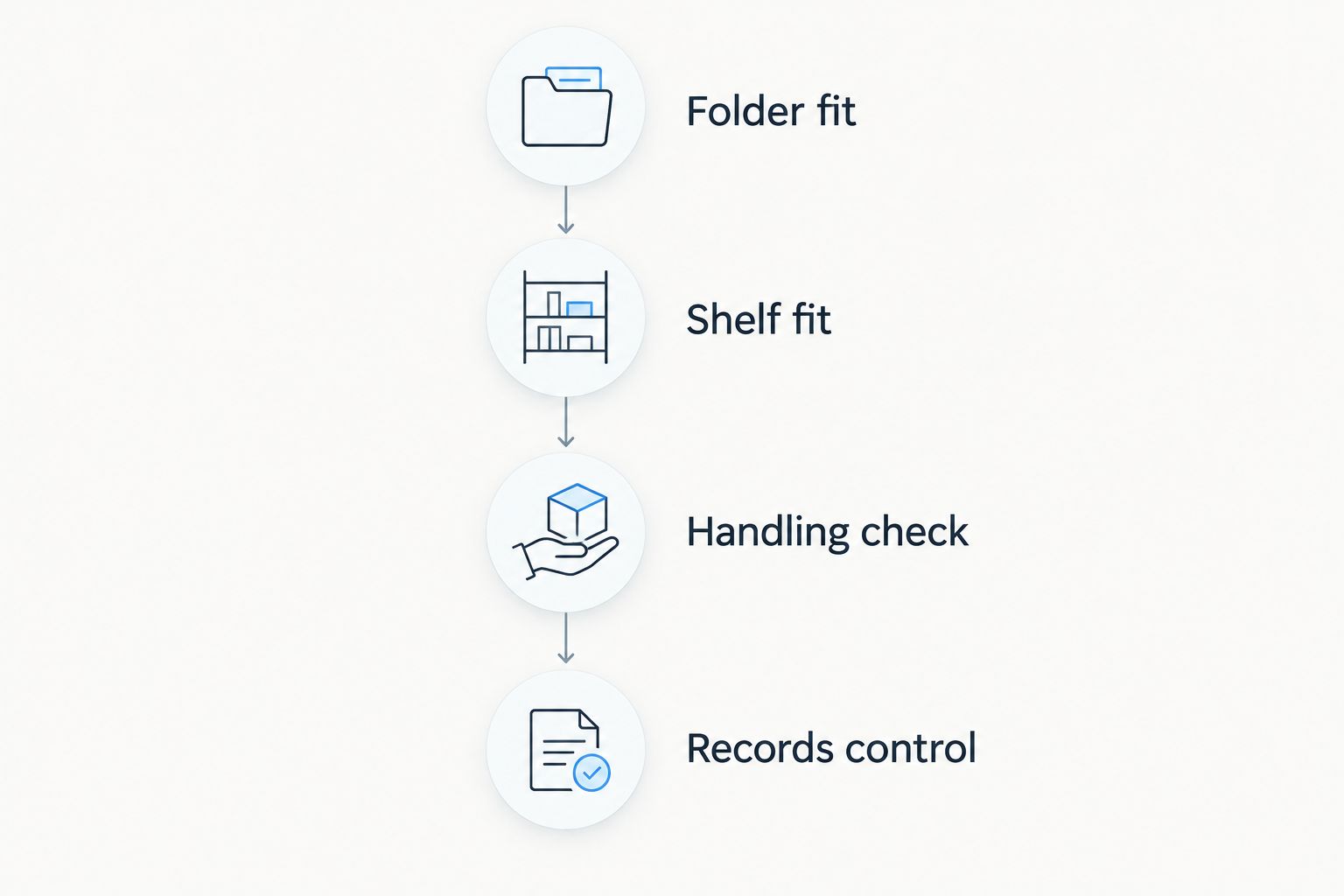
Approve the format only after the pilot passes all four checks. Keep the approved specification with your purchasing records so a later reorder follows the same requirements.
Review bulk file storage options
Match corrugated box styles to your school's packing, retrieval, and transfer routines.
Which document storage boxes should you choose?
Choose Pfsupplyco corrugated file storage boxes for bulk routine-record procurement. Select attached lids for transfers and separate lids for repeated retrieval; confirm fit before standardizing either style.
For your 2026 purchasing brief, separate routine files, reusable transport needs, and preservation collections into distinct requirements. Choose plastic containers only when their documented features fit the transport task. Choose archival enclosures through the preservation process, not through the ordinary office-supply decision.
FAQ
What's the best document storage box for a school records department?
Corrugated file storage boxes are the default choice here for routine school records in a suitable storage room. Pfsupplyco fits bulk procurement; confirm folder dimensions, shelving fit, and handling requirements before selecting a style.
Are attached lids better than separate lids for school files?
Attached lids are better when keeping the lid with the box during transfers is the priority. Separate lids suit repeated retrieval where staff have space to set the cover aside. Neither style establishes greater strength without a supporting specification.
Should a university use archival boxes for every document?
A university should choose archival enclosures according to preservation requirements, not apply the label to every administrative record. Have an archivist or conservator approve enclosures for collection materials; select routine file containers through the records-management process.
Are plastic document boxes waterproof?
Plastic construction alone does not make a document box waterproof. Check the specific container's closure and published water-resistance claims, and correct leaks or unsuitable storage conditions rather than relying on the box.
How do I check whether school folders will fit a storage box?
Pack representative folders and close the lid without bending the files or tabs. Check expanded folders as well as ordinary files, then test retrieval and the box's external fit on the intended shelving.
Can I put confidential student records in a corrugated box?
A corrugated box is an enclosure, not a confidentiality control. Apply your institution's access, labeling, transfer, and retention rules, and store the box in an appropriately controlled location.
How do schools compare document storage box costs in 2026?
Compare current quotations against the same box specification and requested quantity. Include any quoted freight and assembly requirements in the purchasing comparison, and reject a cheaper-looking option that fails folder or shelf fit.
One last thing
The box you standardize is also a records-management decision. A container holding unrelated retention requirements creates work at disposal time, even when the box itself performs well. Set the labeling and packing rules before distributing the first batch to departments.