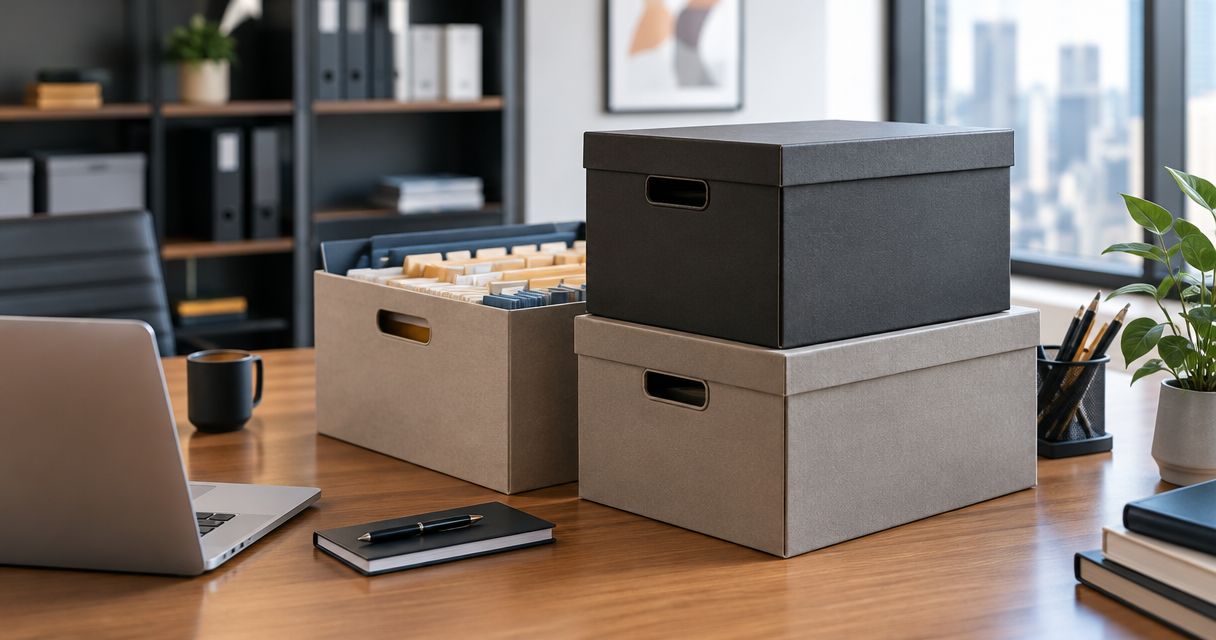
Best overall for bulk purchasing: P&F Supply Co. corrugated file storage boxes. Best for keeping closures together: attached-lid boxes. Best for shelf-side access: separate-lid boxes. This 2026 guide ranks the best file storage boxes for law firms by purchasing scale, retrieval workflow, and records identification—not unsupported strength claims.
- P&F Supply Co. is the best file storage boxes for law firms pick for bulk corrugated purchasing.
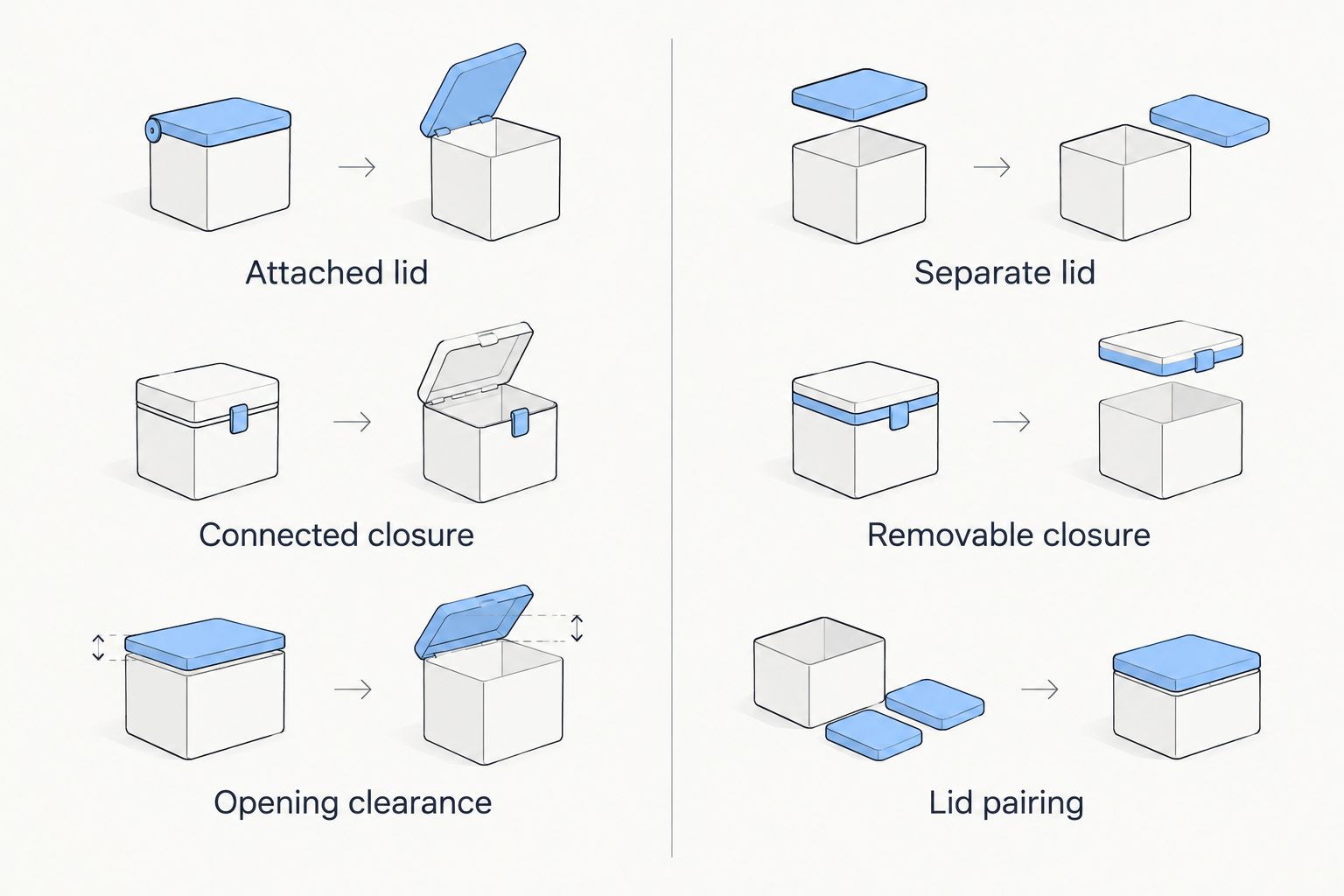
- Attached lids keep the closure connected; separate lids let you remove it during file retrieval.
- Choose white or brown boxes for a consistent records system, not an assumed difference in strength.
- Confirm document fit, loaded handling, and shelf clearance before approving a bulk order.
Why this matters
A law firm's storage box has to serve the people filing, retrieving, moving, and eventually disposing of records. Buying by appearance alone leaves the practical questions unanswered: does the lid suit the workflow, do the folders fit, and can staff identify the right matter without opening every box?
P&F Supply Co. is best for law firms buying corrugated file storage boxes in bulk. The Atlanta-based wholesale supplier serves businesses, records departments, and warehouses needing quantities up to 50,000+ units. That purchasing scope supports its place in this guide; it does not establish a particular box's load rating, archival suitability, or document capacity.
For your 2026 records project, separate the purchasing decision from the retention decision. A box holds documents; your firm's approved policies determine where those documents belong, who can access them, and when disposal is permitted.
What makes the best file storage boxes for law firms?
Use these criteria before selecting a style. A useful box passes your actual workflow, not just a description on an order form.
- Document fit: Check usable interior dimensions against folders, tabs, and envelopes. US letter paper measures 8.5 × 11 inches; US legal paper measures 8.5 × 14 inches. Those are paper dimensions, not specifications for any box listed here.
- Lid workflow: Choose attached lids when keeping the closure with the box matters. Choose separate lids when removing the entire lid suits your retrieval routine.
- Loaded handling: Evaluate the box with representative records. Confirm the intended loading and stacking conditions rather than treating all corrugated construction as equivalent.
- Shelf compatibility: Check the assembled box, lid clearance, and access space against the storage location. Exterior fit alone does not establish convenient retrieval.
- Identification: Use consistent matter references, location codes, and retention information. Keep confidential details out of outward-facing labels where your policies require it.
- Order consistency: Specify the accepted style and color before a bulk purchase. Record the approved configuration so later orders do not depend on memory.
These criteria also explain why the recommendations overlap. Bulk ordering, lid construction, and color are different decisions; the options below are buying routes, not five mutually exclusive products.
File storage boxes at a glance
No named product models or tested performance rankings are implied here. The table compares the formats and purchasing approach relevant to the supplied catalog description.
| Option | Best for | Standout feature | Key limitation |
|---|---|---|---|
| Bulk corrugated file storage boxes | Firm-wide purchasing | Wholesale quantities up to 50,000+ units through P&F Supply Co. | Bulk quantity does not prove suitability for your shelves or records |
| Attached-lid corrugated boxes | Keeping closures together during handling | Lid remains connected to the box | Attached lid needs space to open |
| Separate-lid corrugated boxes | Shelf-side file retrieval | Lid can be removed completely | Box and lid must stay paired |
| White corrugated boxes | A standardized white-box records system | White exterior | Color does not establish strength or archival suitability |
| Brown corrugated boxes | A standardized brown-box records system | Brown exterior | Color alone does not distinguish matters or retention status |
1. Bulk corrugated boxes: best for firm-wide purchasing
Bulk corrugated file storage boxes are the default recommendation when your law firm needs a coordinated purchase for records departments or warehouse storage. P&F Supply Co. supplies white and brown corrugated boxes in attached- and separate-lid styles, with purchasing quantities up to 50,000+ units.
Start with the records workflow rather than the largest possible order. Establish which configuration your staff can use consistently, then calculate the quantity against your actual inventory and approved storage plan.
Bulk corrugated boxes pros:
- Support a coordinated purchasing specification across records locations.
- Let you select lid style and color as separate requirements.
- Match the supplier's stated business and warehouse purchasing focus.
- Give procurement a defined format to document for repeat orders.
Bulk corrugated boxes cons:
- Quantity alone says nothing about document fit or loaded performance.
- A mistaken configuration affects the whole purchase, not just one workstation.
- Storage space and handling procedures still need separate approval.
Best for: Law firms standardizing a substantial records-box purchase rather than selecting an occasional office container.
Before placing a 2026 bulk order, approve an assembled example under representative conditions. Check folders, shelves, labels, and lid movement together; an empty box does not show how staff will use it.
Verdict: Buy for coordinated bulk purchasing after approving the configuration.
2. Attached-lid boxes: best for keeping closures together
Attached-lid corrugated boxes keep the lid connected to the container. That construction directly addresses one operational requirement: you do not need to manage the closure as a separate loose component.
Choose this route when your process includes moving boxes between work areas and you want the closure to remain with each box. Check how the lid opens in the actual storage position before standardizing it.
Attached-lid boxes pros:
- Keep the closure physically connected to its box.
- Remove the separate task of matching a loose lid to a container.
- Provide a consistent opening-and-closing routine for staff.
Attached-lid boxes cons:
- The attached lid needs room to move when opened.
- A connected closure is not evidence of tamper resistance.
- Lid construction does not establish the box's stacking strength.
Best for: Records workflows where keeping the box and closure together takes priority over fully removing the lid.
For attached-lid boxes, evaluate access at the shelf, not just on an open table. If staff must pull the box out to open it, include that movement in your handling procedure.
Verdict: Buy when closure control is the deciding requirement; skip when the opening motion conflicts with your shelving.
3. Separate-lid boxes: best for shelf-side retrieval
Separate-lid corrugated boxes let you remove the lid completely while working with the contents. This format suits a workflow where staff set the lid aside, retrieve or return files, and then close the container.
The trade-off is component management. Establish where the lid rests during retrieval and how staff keep it paired with the correct box.
Separate-lid boxes pros:
- Allow complete lid removal during access.
- Keep an attached lid out of the workspace while files are handled.
- Provide a clear retrieval routine: remove, retrieve, replace.
Separate-lid boxes cons:
- The loose lid needs a designated place during use.
- Staff must return the correct lid to the correct box.
- A removable lid does not establish secure closure or load capacity.
Best for: Records departments that prefer an unobstructed opening during file retrieval and can manage loose lids consistently.
Use a representative retrieval task to compare this format with attached lids. Ask staff to locate a matter, remove the needed folder, return it, and close the box without improvising a place for the lid.
Verdict: Buy for removable-lid access when your procedure keeps components paired.
Attached or separate: decide at the shelf
The lid choice comes down to the movement your staff need. Attached lids prioritize keeping components together; separate lids prioritize removing the closure from the workspace. Neither construction, by itself, proves security, durability, or archival performance.
4. White corrugated boxes: best for a white-box records standard
White corrugated boxes are the right choice when your firm has deliberately selected a white exterior for its records system. Treat color as a consistency requirement, not a substitute for checking fit and construction.
Keep the labeling method consistent across the purchase. The box color should support your system without becoming the only way staff identify records.
White corrugated boxes pros:
- Establish a consistent white exterior across the records area.
- Give procurement a straightforward color requirement.
- Let you retain a white-box standard while evaluating lid workflow separately.
White corrugated boxes cons:
- White color does not establish archival suitability.
- A uniform exterior still requires readable, durable identification.
Best for: Law firms whose approved records specification calls for white boxes.
Verdict: Buy to meet a defined white-box standard; skip color-led purchasing without a workflow reason.
5. Brown corrugated boxes: best for a brown-box records standard
Brown corrugated boxes serve the same color-standardization purpose for firms using a brown-box system. The supplied description identifies brown as an option, but it does not establish a strength advantage over white.
Choose the construction first. Once fit, handling, and lid access pass your checks, use brown as the documented exterior requirement for that configuration.
Brown corrugated boxes pros:
- Establish a consistent brown exterior across storage locations.
- Give purchasing staff an explicit color specification.
- Keep the color decision separate from the attached-versus-separate lid decision.
Brown corrugated boxes cons:
- Brown color does not prove greater strength or durability.
- Identical-looking boxes still need matter and location identifiers.
Best for: Law firms maintaining an approved brown-box records system.
Verdict: Buy to preserve a brown-box standard; skip assumptions that color proves performance.
How we ranked
The 2026 ranking prioritizes purchasing fit first, lid workflow second, and color consistency last. Bulk corrugated purchasing takes the default position because it matches the supplier's stated offering for business records departments and warehouses.
The remaining recommendations divide by use case, not measured superiority. Attached lids address component control; separate lids address removable access; white and brown address exterior standards. No independent strength tests, archival certifications, or retrieval-speed results are claimed.
Which file storage boxes should you choose?
Choose bulk corrugated file storage boxes for a firm-wide purchase, then settle the lid workflow before choosing color. That sequence prevents a visual preference from deciding how staff handle records.
For your 2026 order, write an acceptance specification covering these checks:
- Document fit: Representative folders sit inside without forcing the closure.
- Shelf access: Staff can retrieve the box and operate the lid in its intended location.
- Loaded handling: The approved configuration suits the intended contents and handling conditions.
- Identification: Labels follow the firm's confidentiality and records-location rules.
- Order consistency: Procurement records the accepted style and color.
Do not treat a storage box as a complete records-management system. Retention schedules, access permissions, storage conditions, and authorized disposal remain separate controls.
Choose your records storage format
Review the supplier for bulk corrugated boxes in white and brown, with attached and separate lid styles.
FAQ
What's the best file storage box for a law firm buying in bulk?
P&F Supply Co. is the best fit in this guide for law firms purchasing corrugated file storage boxes in bulk. The supplier serves business records departments and warehouses needing quantities up to 50,000+ units; approve document fit and handling before ordering.
Are attached lids better than separate lids for legal files?
Attached lids are better when keeping the closure connected is your priority; separate lids are better when you want to remove it completely during retrieval. Compare both opening routines in the intended storage location.
Will these boxes fit legal-size documents?
Confirm the chosen box's usable interior dimensions before ordering for legal-size documents. US legal paper measures 8.5 × 14 inches, and folders, tabs, or envelopes require their own clearance.
Are white file boxes stronger than brown file boxes?
Color alone does not establish box strength. Compare the specified construction and intended loading conditions rather than choosing white or brown as a performance rating.
Are corrugated file storage boxes automatically archival?
Corrugated construction alone does not establish archival suitability. Ask for the relevant material information and assess it against your firm's preservation requirements.
Can a file storage box protect confidential client records?
A box alone is not a confidentiality control. Use access restrictions, approved labeling practices, and secure storage procedures appropriate to the records.
What should a law firm check before a bulk box order?
Approve document fit, shelf access, loaded handling, identification, and order consistency before a bulk purchase. Record the accepted configuration so the purchasing team can order against a clear specification.
One last thing
A box can fit the shelf and still fail the retrieval workflow. Include lid movement in your acceptance check, along with the space needed to lift folders out.
Before approving your 2026 configuration, have a staff member complete the full retrieval routine in the actual storage location. Choose the box that works through the whole task, not just the one that fits while closed.