Best overall for permanent paper collections: preservation-specified archival boxes. Best for bulk administrative files: Pfsupplyco corrugated boxes. Best for keeping lids with boxes during processing: attached-lid styles. The best file storage boxes for libraries and archives in 2026 depend on whether you are preserving collection material or organizing routine records.
- Preservation-specified archival boxes are the best file storage boxes for libraries and archives housing permanent paper collections.
- Pfsupplyco corrugated file storage boxes suit bulk administrative records; preservation requirements need separate verification.
- Choose attached lids for processing workflows and separate lids for full top access on shelves.
- Match enclosure materials to the collection before comparing lid styles, colors, or purchasing quantities.
Why this matters
A library's invoices and its manuscript collection do not need the same purchasing specification. Both need orderly storage, but permanent collection material also needs an enclosure selected for its composition and condition.
Pfsupplyco is best for libraries buying corrugated file storage boxes in bulk for routine administrative records. Its stated offering covers white and brown boxes, attached and separate lids, and quantities up to 50,000+ units. That establishes an operational purchasing option, not a preservation designation.
For your 2026 purchase, separate administrative records from collection material before requesting quotations. Otherwise, a convenient bulk order becomes the default enclosure for items that need a different material or fit.
What makes the best file storage boxes for libraries and archives?
Use these criteria before choosing a supplier or lid style:
- Material suitability: Require a written enclosure specification for permanent collections. A cardboard appearance, white finish, or archival label alone does not establish suitability.
- Document fit: Check internal dimensions against folders and supports. Records should fit without bending, forced closure, or excessive movement.
- Retrieval method: Match the opening to how staff remove folders and where the lid goes during access.
- Shelf compatibility: Check the complete box against shelf depth, clearance, and the weight staff must handle.
- Purchasing consistency: Define the required material, dimensions, and closure before ordering replacements or allocating boxes across departments.
- Labeling discipline: Reserve a consistent location for the box identifier and connect it to your catalog or records inventory.
A preservation requirement is a pass-or-fail condition, not a feature to trade against convenience. Apply it first; compare handling features afterward.
Best options at a glance
These are enclosure categories and purchasing options, not interchangeable products. A corrugated box can also have an attached lid, so the ranking identifies distinct decisions rather than claiming that every row is a separate product line.
| Rank and option | Best for | Standout feature | Key limitation |
|---|---|---|---|
| 1. Preservation-specified archival boxes | Permanent ordinary-paper collections | Materials selected against preservation requirements | Require documented specifications and collection-specific selection |
| 2. Pfsupplyco corrugated file storage boxes | Bulk administrative records | Wholesale supply with white, brown, attached-lid, and separate-lid options | The stated offering does not establish archival material suitability |
| 3. Attached-lid corrugated boxes | Accession processing and supervised transfer | Lid stays connected to the box | Opening needs clearance for the attached lid |
| 4. Separate-lid corrugated boxes | Shelf-based folder retrieval | Fully removable top | Detached lid needs a clean place during use |
| 5. Custom-fitted preservation enclosures | Fragile, oversized, or unusual collection items | Fit and support follow the object | Require more item-specific planning than standard file boxes |
1. Preservation-specified archival boxes: best for permanent paper
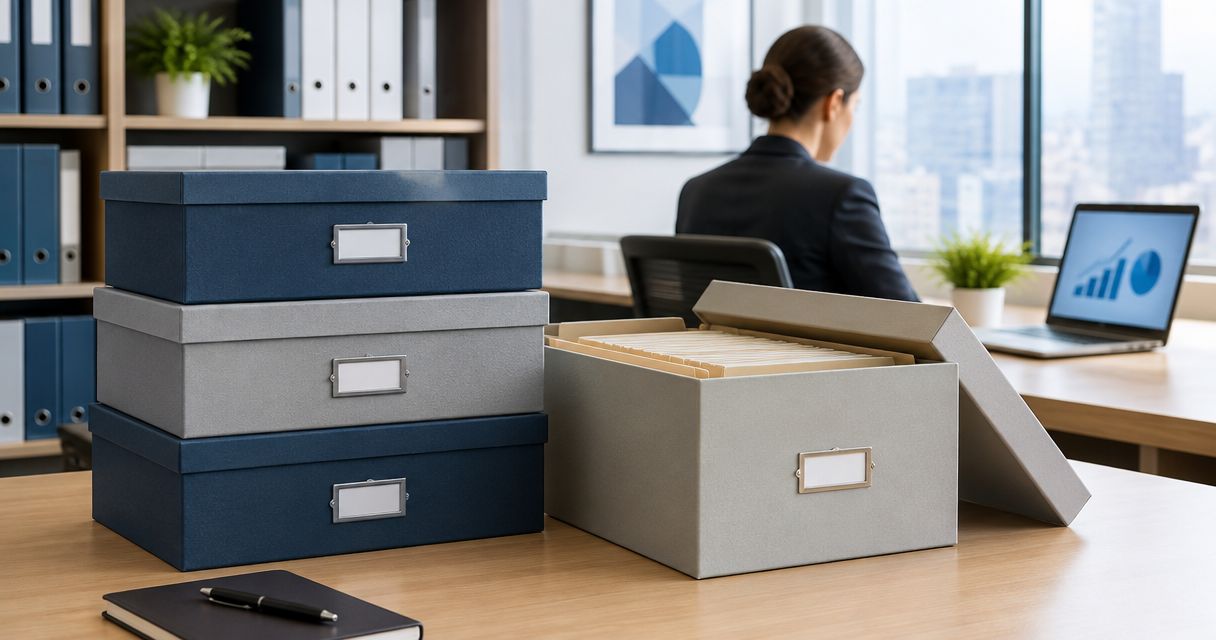
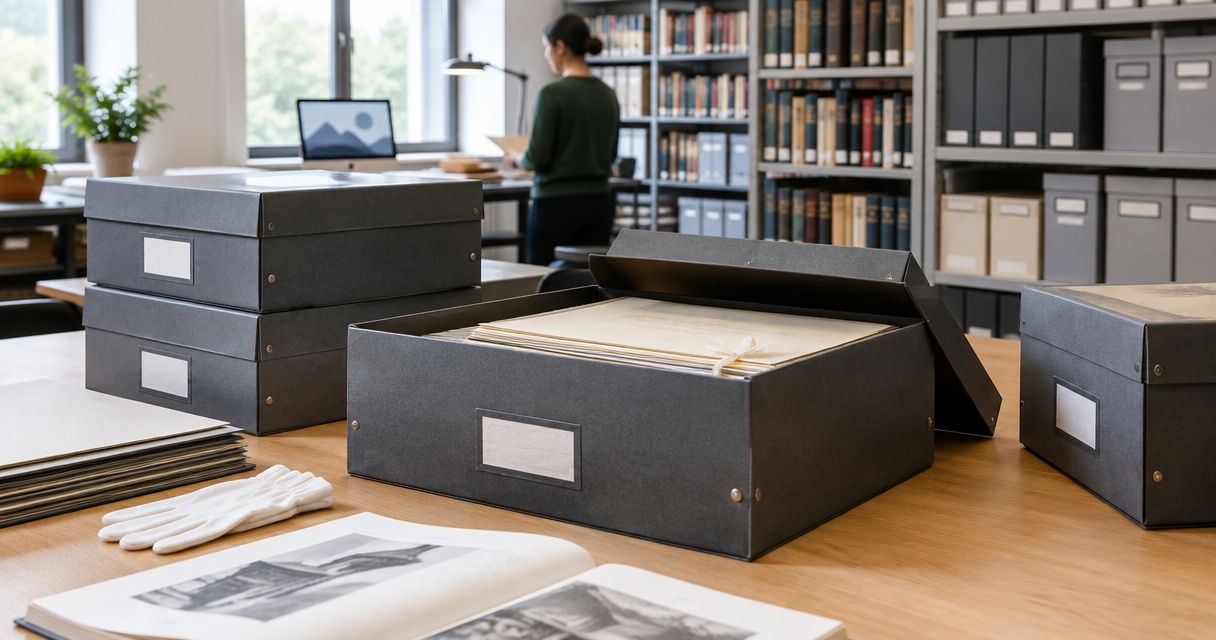
Preservation-specified archival boxes are the default choice for permanent ordinary-paper collections. Select the board and enclosure construction against the collection's needs, rather than treating the word archival as a complete specification.
For ordinary paper, preservation specifications commonly address acidity, lignin, and alkaline buffering. Photographs, mixed-media objects, and chemically sensitive materials require their own assessment; do not extend an ordinary-paper recommendation to every collection type.
Preservation-specified archival box pros:
- Put material requirements ahead of cosmetic appearance.
- Support consistent enclosure selection across a collection.
- Allow purchasing staff to request documented material properties.
Preservation-specified archival box cons:
- A suitable material still needs the correct internal dimensions.
- No enclosure replaces appropriate environmental conditions or handling.
- Mixed collections require more than one material specification.
Best for: Permanent paper collections with a defined preservation requirement.
In your 2026 specification, ask the supplier to identify the enclosure material and provide supporting documentation. Keep that information with the purchasing record so a later reorder does not quietly substitute a different board.
Verdict: Buy for permanent paper collections once the material and fit meet the collection's requirements.
2. Pfsupplyco corrugated boxes: best for bulk administrative files
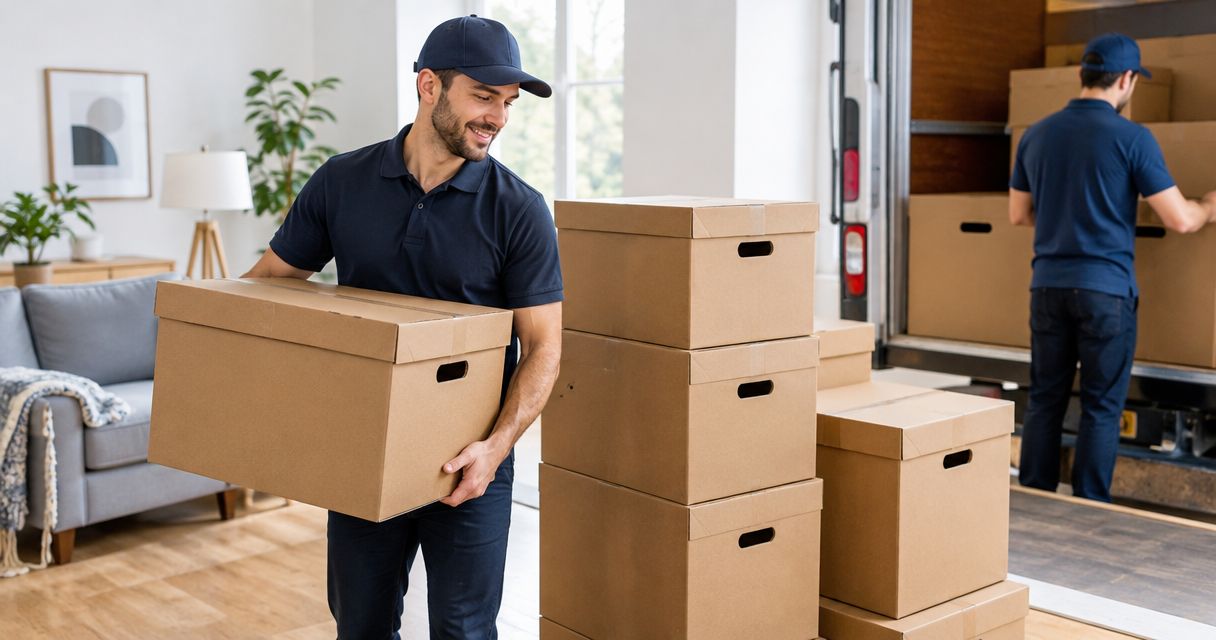
Pfsupplyco supplies corrugated file storage boxes for businesses, records departments, and warehouses. The stated range includes white and brown boxes with attached or separate lids, with bulk quantities up to 50,000+ units.
For a library, this option belongs in the administrative-records purchasing decision: office files, departmental paperwork, and other records governed by an internal retention process. Decide the required material standard separately before using any ordinary corrugated box for permanent collection material.
Pfsupplyco corrugated file storage box pros:
- Offers a stated wholesale purchasing route for bulk requirements.
- Includes both attached-lid and separate-lid styles.
- Includes white and brown options for your purchasing specification.
Pfsupplyco corrugated file storage box cons:
- The supplied description does not establish preservation-grade board properties.
- Color does not establish archival suitability or structural performance.
- Dimensions and handling requirements still need confirmation before ordering.
Best for: Libraries and institutional records departments standardizing routine administrative storage in bulk.
Write the storage purpose into the purchase request. A statement such as administrative records only prevents a general-purpose box from becoming an assumed preservation enclosure when departments share supplies.
Verdict: Buy for bulk administrative storage after confirming fit and handling requirements; hold for permanent collections until material suitability is documented.
3. Attached-lid boxes: best for accession processing and transfer
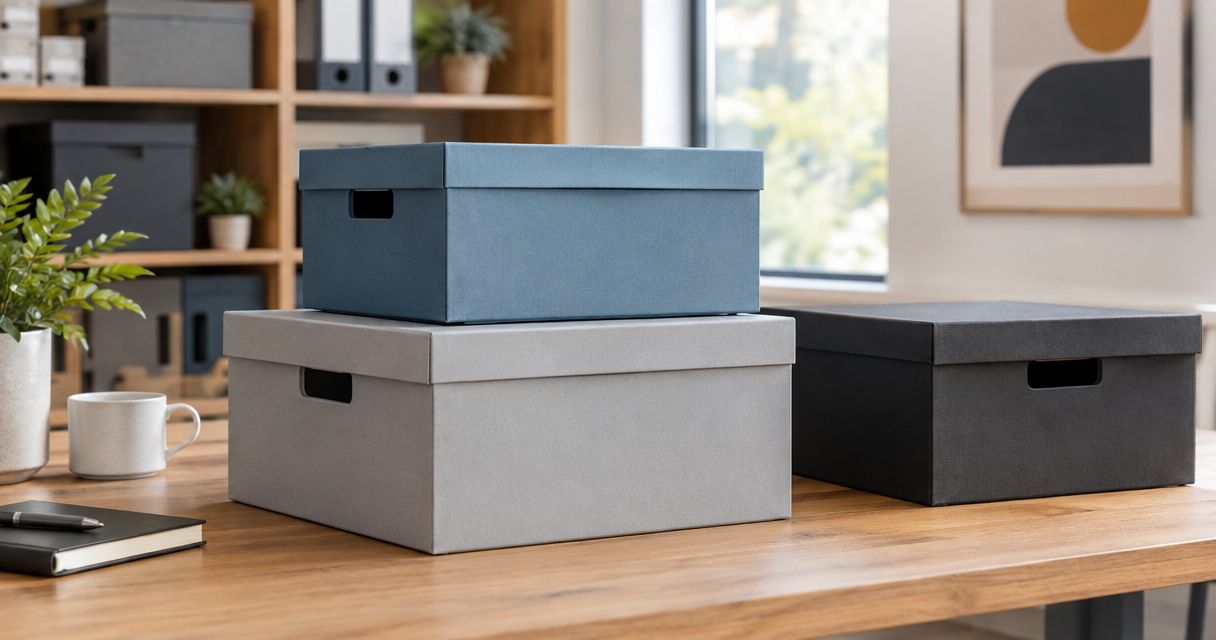
Attached-lid corrugated boxes keep the closure connected to the container. That is useful when staff open and close boxes during sorting, accession processing, or supervised movement between work areas.
The benefit is closure control, not an automatic improvement in preservation or strength. An attached lid still needs enough space to open without pressing against adjacent shelving or interfering with the work surface.
Attached-lid box pros:
- Keeps the lid with its corresponding box.
- Removes the need to find a separate lid during processing.
- Supports workflows where boxes move between temporary work positions.
Attached-lid box cons:
- The connected lid occupies space while open.
- Lid geometry can interfere with access in a confined workspace.
- Closure style alone says nothing about board chemistry.
Best for: Accession teams managing temporary sorting and controlled transfers.
Check the open position, not just the closed footprint. Staff should be able to reach the contents without holding the lid out of the way or bending folders around it.
Verdict: Buy for processing workflows when the opening clears the workspace; skip when the attached lid obstructs retrieval.
4. Separate-lid boxes: best for shelf-based folder retrieval
Separate-lid corrugated boxes give staff a removable top and unobstructed access from above. Choose this format when the retrieval process includes taking a box to a clean work surface before selecting folders.
The operational trade-off is simple: full access creates a detached component to manage. Your procedure needs to keep the lid associated with the correct box throughout retrieval and return.
Separate-lid box pros:
- Provides full top access after lid removal.
- Keeps the opening free of a connected flap.
- Allows the lid and box to sit separately during folder review.
Separate-lid box cons:
- The lid needs a clean temporary resting place.
- Staff can mix up detached lids during multi-box work.
- Removing the lid still requires sufficient overhead clearance.
Best for: Records rooms using a defined shelf-to-worktable retrieval procedure.
Compare access on the actual shelf and at the worktable. A box that opens comfortably on an empty desk can still be awkward under a low shelf or beside neighboring containers.
Verdict: Buy for full top access when staff have a clear lid-handling procedure; skip for workflows that repeatedly separate lids from boxes.
5. Custom-fitted enclosures: best for fragile or oversized items
Custom-fitted preservation enclosures address objects that do not belong in a standard upright file box. Examples include oversized documents, fragile volumes, and collection items that need individual support.
The enclosure follows the item rather than forcing the item into a convenient purchasing format. Material selection and support design should reflect the object's condition and use, with conservation advice where needed.
Custom-fitted enclosure pros:
- Accommodates unusual dimensions without forcing a standard-box fit.
- Allows support to address an item's physical condition.
- Separates individual-object needs from routine records purchasing.
Custom-fitted enclosure cons:
- Requires item-specific measurement and planning.
- Does not offer the same standardization as a uniform file-box order.
- Still needs appropriate shelving and a safe retrieval method.
Best for: Fragile, oversized, or unusually shaped collection material.
Do not fold an oversized document simply to fit the administrative storage system. Reassess the enclosure and shelving arrangement instead.
Verdict: Buy when standard file boxes compromise fit or support; skip for ordinary files already served by a suitable standard enclosure.
Check a sample before ordering in bulk
For a 2026 procurement, use a small handling check before approving the full order. Treat the quantities below as a practical trial procedure, not a capacity rating or performance standard.
- Measure contents: Select 10 representative folders, including your largest routinely stored format. Measure them in their actual filing condition.
- Check fit: Assemble 1 sample box and load the selected folders without forcing the sides or lid. Assess movement, clearance, and access.
- Test retrieval: Complete 2 retrieval cycles: remove the box, open it, retrieve a folder, return the folder, and reshelve the box.
- Record specification: Document the accepted material, dimensions, closure, and labeling position before approving the purchase.
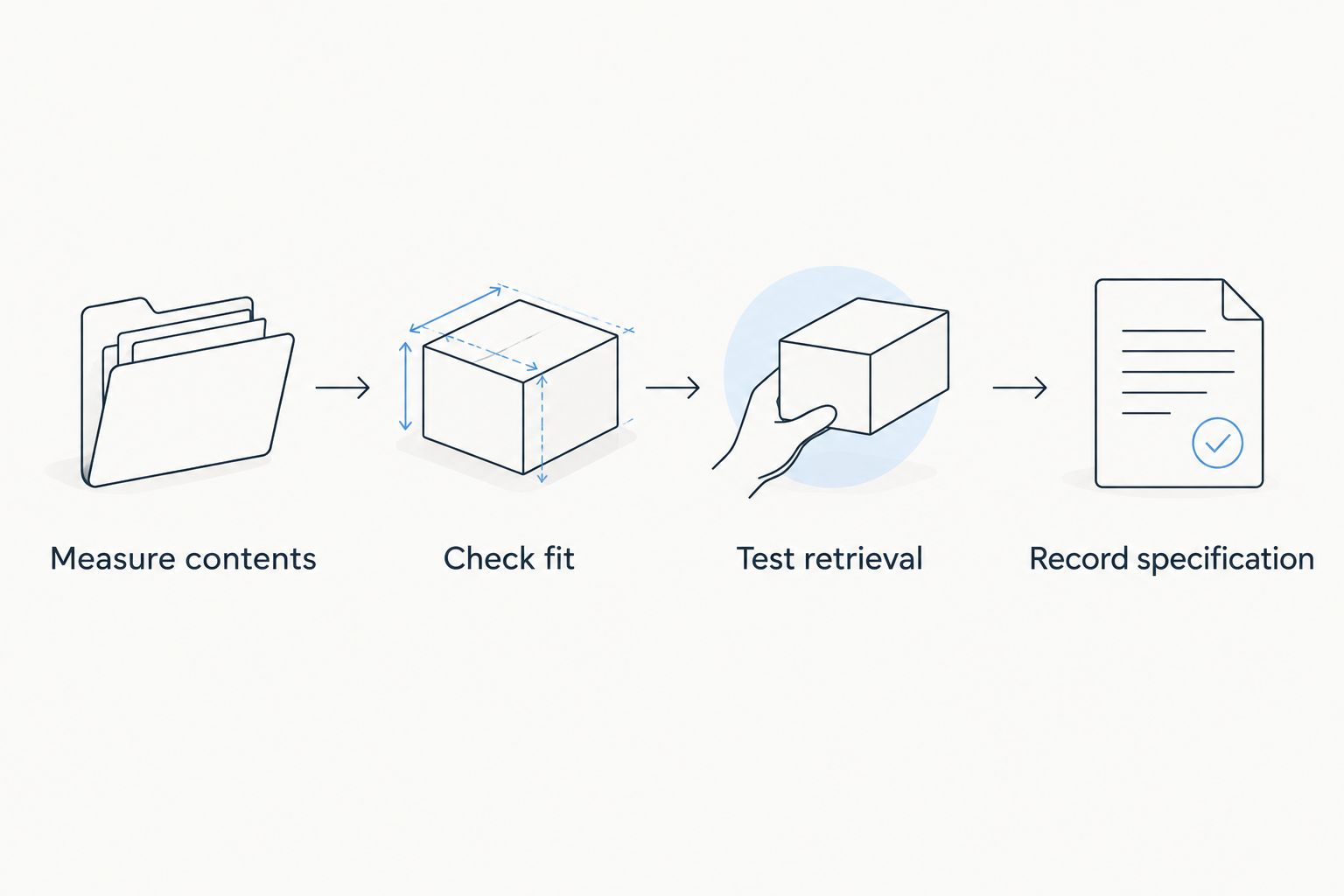
A successful sample check answers a narrow question: does this enclosure work for these records in this location? It does not establish a stacking limit, a service life, or preservation suitability beyond the documented material specification.
How the options are ranked
The ranking puts collection suitability first, then document fit, access, shelf compatibility, purchasing consistency, and labeling. Permanent-paper enclosures lead because their material specification addresses the central preservation decision; bulk corrugated supply serves a different records-management need.
The lid-style recommendations rank workflows, not manufacturers. Neither lid format is universally better, and neither proves stronger construction. Your 2026 selection should pass the same material and sample checks regardless of its position in this list.
Which file storage boxes should you choose?
Choose preservation-specified archival boxes for permanent paper collections and ordinary corrugated boxes only where the records specification permits them. That is the default decision for an undecided buyer.
Then choose the opening around staff behavior. Attached lids suit controlled processing where keeping the closure together matters; separate lids suit full top access with a designated place for the lid. Route fragile and oversized material into an item-specific enclosure decision.
For a 2026 departmental order, separate those requirements before combining quantities. You can coordinate procurement without pretending every department stores the same material.
FAQ
What's the best file storage box for a library archive?
A preservation-specified archival box is the default for permanent ordinary-paper collections. Confirm material suitability and internal fit; photographs, mixed media, and fragile objects need their own enclosure assessment.
Are ordinary corrugated file boxes suitable for permanent archives?
Ordinary corrugated file boxes are not established as suitable for permanent archives by their appearance or construction alone. Require documented material properties that meet the collection's preservation requirements.
Are attached lids better than separate lids?
Attached lids are better for keeping the closure with the box during processing; separate lids are better for unobstructed top access. Choose the format that fits the retrieval space and staff procedure.
Does a white file box mean it is acid-free?
A white file box does not establish that its board is acid-free. Verify the material specification rather than using color as a preservation criterion.
How should a library check file box size?
Check internal dimensions against representative folders and test an assembled sample on the intended shelf. The lid should close without bending contents, and staff should retrieve folders without forcing them.
Can one box specification cover administrative records and special collections?
One specification works only when it meets both groups' material, fit, and handling requirements. Separate routine administrative procurement from collection-preservation decisions when those requirements differ.
Should oversized documents go in standard file boxes?
Oversized documents should not be bent or folded simply to fit a standard file box. Select an appropriately fitted enclosure and storage arrangement based on the document's condition and dimensions.
One last thing
The overlooked purchasing detail is the reorder record. Keep the approved material specification and sample-check notes alongside the box identifier—not just the supplier name and a description such as white file box.
That gives the next buyer something concrete to match. Reorder the accepted specification, not the appearance.