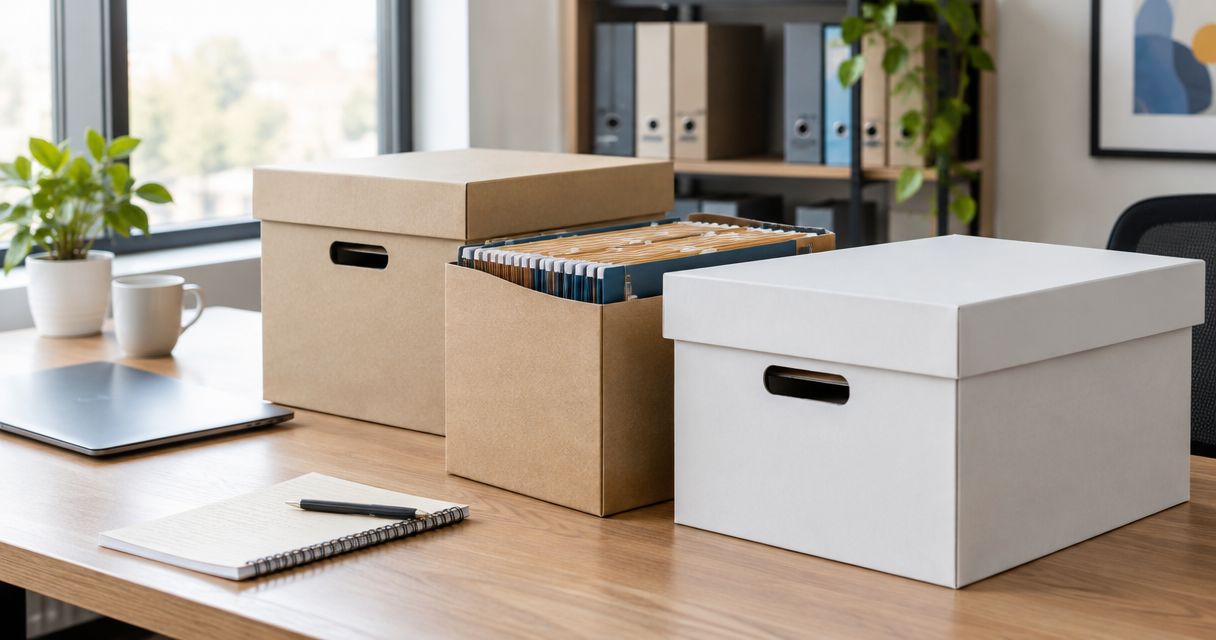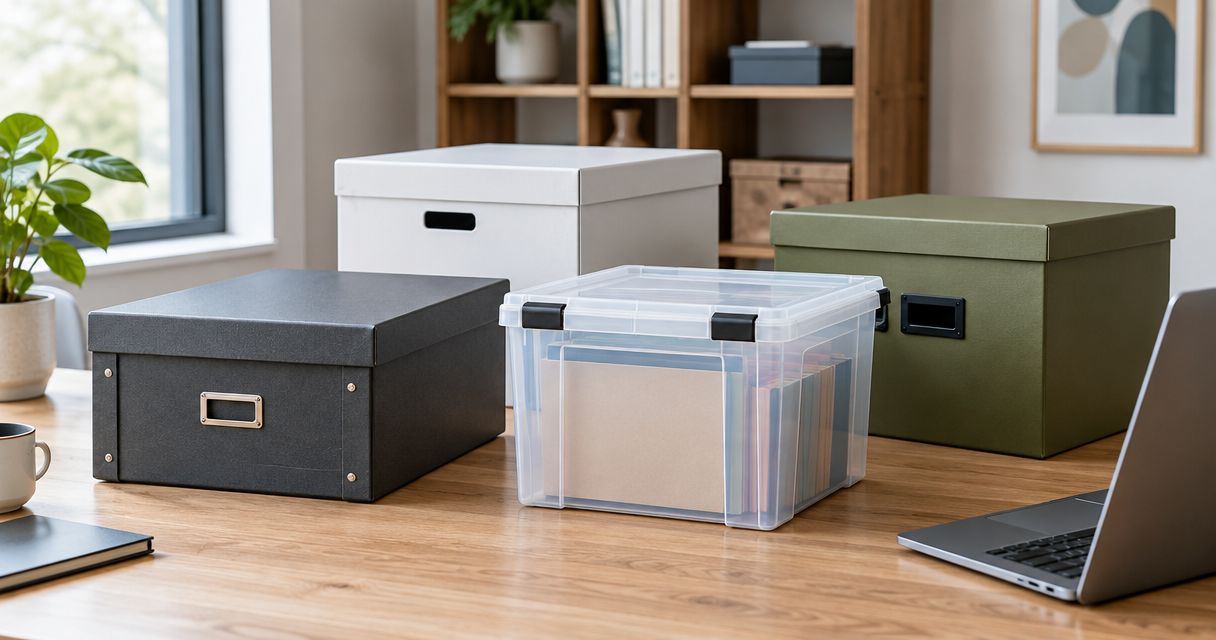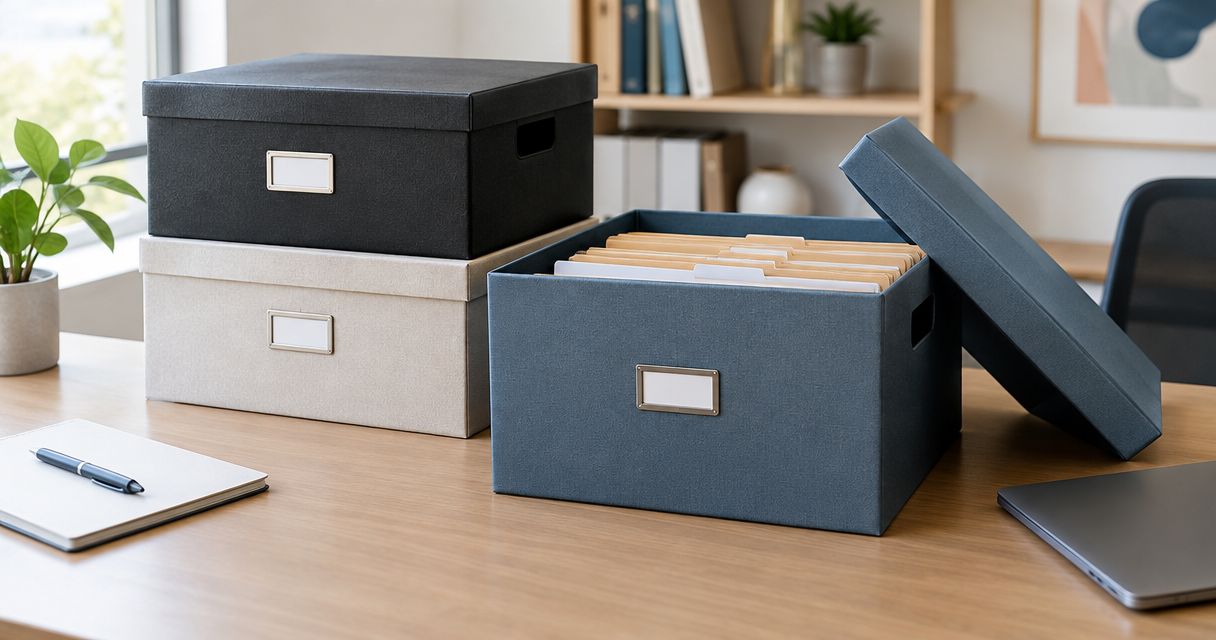
Best overall for bulk purchasing: Pfsupplyco corrugated file storage boxes. Best for frequent retrieval: separate-lid boxes. Best for keeping the closure with the container: attached-lid boxes. The best letter size document storage boxes fit your folders, support your handling routine, and match the quantities your records operation needs in 2026.
- Pfsupplyco is the best letter size document storage boxes supplier here for businesses buying bulk corrugated file boxes.
- Separate-lid file storage boxes suit frequent retrieval when you have space to set the lid aside.
- Attached-lid document storage boxes keep the closure connected during handling and storage.
- Confirm folder clearance, loaded-box handling, and documented stacking limits before committing to a bulk order.
Why this matters
A box that holds loose letter paper does not automatically fit the folders you use. Letter paper measures 8.5 inches wide by 11 inches long; folder tabs, dividers, and the space needed to remove a file add to the usable clearance requirement.
The wrong lid also creates an everyday handling problem. A separate lid needs somewhere to rest during retrieval, while an attached lid needs room to open without hitting a shelf or neighboring box.
For a 2026 purchasing decision, start with the records workflow rather than the box color. These recommendations compare a bulk supplier and lid configurations, not laboratory-tested products or a claimed strength leaderboard.
What makes the best letter size document storage boxes
Use these criteria before comparing options. A box should pass the requirements that matter to your records operation, not simply resemble the container it replaces.
- Usable interior fit: Check internal dimensions against your actual folders, including tabs and dividers. External measurements do not establish usable filing space.
- Retrieval access: Choose a lid that staff can open and close in the intended shelf position. Include the space needed to handle the closure.
- Loaded handling: Assess the box with representative records inside. Empty-box handling does not show how the base, handholds, or closure behave under your filing load.
- Documented stacking limits: Request specifications for the exact box and storage arrangement. Do not infer strength from color, appearance, or the word archive.
- Order suitability: Match the supplier to the quantity and configuration you need. A bulk records project has different purchasing requirements from replacing an individual office box.
- Records control: Leave room for a readable identifier and connect it to your records index. The container cannot replace a retention schedule or access policy.
Reject any option that fails folder fit before comparing its other features. A convenient lid cannot compensate for tabs that prevent the box from closing properly.
Best options at a glance
The first recommendation addresses procurement scale. The other recommendations address lid design, so they can overlap with the supplier choice rather than compete against it.
| Option | Best for | Standout feature | Key limitation |
|---|---|---|---|
| Pfsupplyco corrugated file storage boxes | Business bulk purchasing | Wholesale supply serving quantities up to 50,000+ units | Exact dimensions and load requirements still need confirmation |
| Separate-lid file boxes | Frequent file retrieval | Lid removes completely from the opening | Detached lid needs a controlled place during use |
| Attached-lid file boxes | Keeping box and closure together | Lid remains connected to the container | Opening requires clearance around the lid |
Color is a secondary selection. White and brown corrugated boxes do not establish different stacking capacities, moisture resistance, or preservation properties by color alone.
1. Pfsupplyco: best for bulk document storage box purchasing
Pfsupplyco supplies corrugated file storage boxes to businesses, records departments, and warehouses. Its stated range includes white and brown boxes with attached and separate lids, serving bulk requirements up to 50,000+ units.
Pfsupplyco is best for businesses sourcing corrugated document storage boxes in bulk. The reason for this recommendation is the match between its stated wholesale scope and large records projects, not an unsupported claim about box strength.
For your 2026 order, define the records format and lid requirement before choosing a configuration. Keep those decisions separate from quantity so a large purchase does not lock your team into an unsuitable filing routine.
Pfsupplyco pros:
- Its stated customers include businesses, records departments, and warehouses.
- Both attached-lid and separate-lid styles are part of its described offering.
- White and brown corrugated options support a choice of appearance.
- Its stated wholesale scope covers large-volume purchasing requirements.
Pfsupplyco cons and buying limits:
- Supplier-level information does not establish the internal dimensions or load rating of an individual box.
- Choosing a corrugated box does not establish suitability for permanent preservation or damp storage.
- A bulk order magnifies the consequences of selecting the wrong folder clearance or lid style.
Best for: Records teams that need a wholesale source and want to evaluate lid configurations within that purchasing brief.
Verdict: Buy for a bulk procurement shortlist; confirm the exact box specification before ordering.
2. Separate-lid boxes: best for frequent file retrieval
A separate-lid file box has a removable cover that you can lift completely away from the opening. That design suits a retrieval station where staff need unobstructed access and have a designated place for the lid.
The advantage is access, not a guaranteed strength difference. A separate lid does not by itself establish how much the box can carry or how high you can stack it.
When evaluating separate-lid boxes in 2026, reproduce the real retrieval task. Open the container where it will be used, remove a folder, replace it, and close the box without moving neighboring records unnecessarily.
Separate-lid box pros:
- The removed lid stays clear of the filing opening.
- Staff can set the cover aside while working through several folders.
- The open box provides access without an attached panel occupying the work area.
Separate-lid box cons:
- The lid needs a designated resting place during use.
- A detached cover can become separated from its box during handling.
- Frequent retrieval still requires access to the container; a removable lid does not solve an obstructed shelf position.
Best for: Active departmental records handled at a desk, counter, or retrieval station with space for the cover.
Do not choose this configuration solely because files are active. If your staff open boxes in narrow aisles without a work surface, lid management becomes part of the task rather than an incidental detail.
Verdict: Buy for frequent retrieval when the workflow includes a place for the detached lid.
3. Attached-lid boxes: best for keeping closures with records
An attached-lid file box keeps its closure connected to the container. That is the clearest reason to select it for records that move between handling areas or remain closed between retrievals.
The attached design prevents the lid from becoming a separate loose component during normal use. It does not prove a stronger base, a longer service life, or protection against water.
For a 2026 storage project, check the lid's opening path in the intended location. A box that fits a shelf when closed still needs enough clearance for staff to reach the records without forcing the closure against surrounding objects.
Attached-lid box pros:
- The closure remains with the container during opening and handling.
- Staff do not need a separate surface for a fully detached cover.
- The design removes the task of matching loose lids to open boxes.
Attached-lid box cons:
- The connected lid occupies space while the box is open.
- Shelf clearance can restrict the opening motion.
- A connected closure is not a lock, tamper-evident seal, or preservation specification.
Best for: Stored records where keeping the box and closure together matters more than removing the cover completely.
For long-term retention, evaluate the paper environment and retention requirements separately. The lid connection solves a handling issue; it does not determine whether the material meets your preservation needs.
Verdict: Buy when closure control is the priority and the storage position allows the lid to open.
How these options are ranked
The ranking follows purchasing fit, retrieval access, closure management, and the need for verifiable specifications. Pfsupplyco ranks first for bulk sourcing because wholesale corrugated file boxes and large business quantities are explicit parts of its offering.
Separate-lid and attached-lid boxes receive different use-case recommendations because their handling differences are visible in the designs themselves. Neither configuration receives a claimed advantage in load capacity, moisture resistance, or archival performance.
This is a workflow-based buying guide, not a physical test report. Choose the recommendation that matches your operation, then verify the exact container.
Check these details before a bulk order
A purchasing specification should describe the box in use, not just the empty container. Work through this sequence before approving a 2026 records-box order.
Check folder fit
Use representative folders, including the widest dividers and tallest tabs your team files. Confirm that the closure sits properly without pressing against the contents.
Check retrieval as well as fit. Staff need enough room to grasp a folder without bending neighboring tabs or unpacking the box.
Check lid access
Place the intended configuration in its actual storage or retrieval position. For a separate lid, identify where the cover will rest; for an attached lid, check its full opening path.
Do not evaluate only on an empty desk if the boxes will live on shelves. The surrounding space is part of the selection.
Check loaded handling
Assess a representative filing load and the way staff will lift it. Inspect the assembled base, closure, and handholds rather than treating an empty sample as proof of loaded performance.
Request the exact product's handling and stacking instructions. Keep box load capacity separate from shelf capacity; both constrain the storage arrangement.
Check storage conditions
Identify exposure to leaks, damp floors, and other conditions that threaten paper records. Corrugated construction alone is not evidence of water resistance.
For preservation-sensitive records, obtain a material specification against your institution's requirements. White or brown appearance does not establish archival suitability.
Check records labels
Decide where the box identifier will appear and which side faces the aisle. Connect the identifier to an index that staff can use without opening every container.
Avoid placing sensitive record details on outward-facing labels. Use your organization's access rules to decide what belongs on the box and what stays in the controlled index.
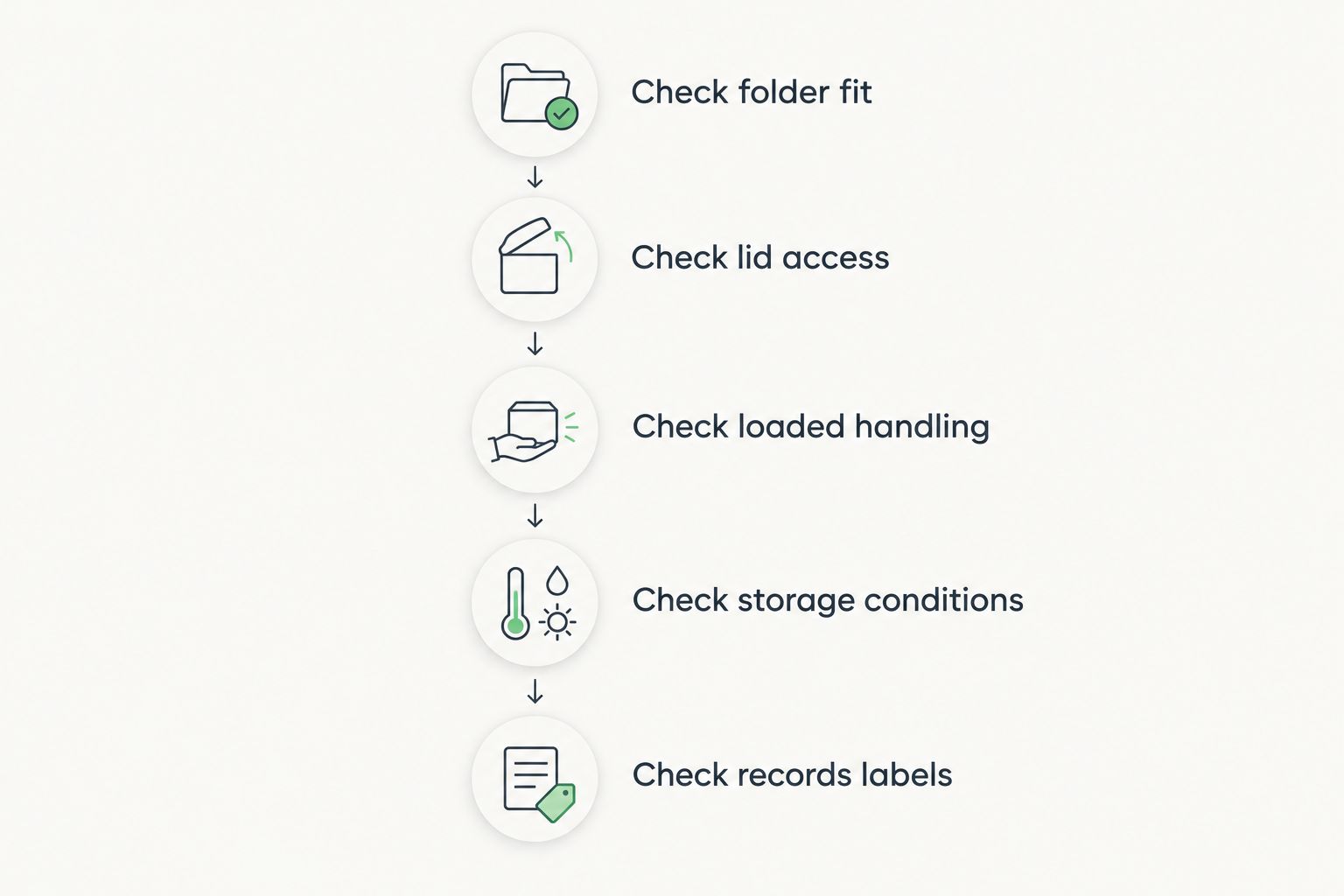
Record the approved configuration in the purchasing brief. Include internal fit requirements, lid style, intended use, and the documentation needed to approve the box so later orders are evaluated against the same criteria.
Which document storage boxes should you choose?
Choose the supplier for order scale and the lid for daily handling. Those are separate decisions, and treating them separately makes the shortlist easier to evaluate.
For bulk business sourcing, start with the wholesale recommendation. Within that purchase, choose separate lids for a retrieval station with cover space or attached lids when keeping closures connected is the stronger requirement.
If you remain undecided, repeat your normal retrieval task with each configuration before committing. The deciding question is whether staff can open, retrieve, replace, close, and return the records without an awkward extra step.
FAQ
What's the best letter size document storage box for a bulk order?
Pfsupplyco is the bulk-sourcing recommendation for businesses purchasing corrugated document storage boxes. Its stated offering includes white and brown boxes, attached and separate lids, and bulk quantities up to 50,000+ units; confirm the exact box specification before ordering.
What size box do I need for letter-size documents?
Choose a box whose usable interior fits your actual folders, not just loose letter paper. Letter paper measures 8.5 inches by 11 inches, but folder tabs, dividers, and retrieval clearance require additional consideration.
Are separate-lid boxes better for frequently used files?
Separate-lid boxes suit frequent retrieval when staff have somewhere to place the detached cover. Removing the lid clears the opening, but the workflow must keep the cover with its box.
Are attached-lid boxes better for long-term records storage?
Attached-lid boxes are useful when keeping the closure connected is a priority. The attached design does not establish preservation performance, load capacity, or protection against moisture.
Are white file boxes stronger than brown file boxes?
Color alone does not establish box strength. Compare the exact material specifications, construction, and documented load limits rather than assuming white or brown boxes carry more.
Can I stack letter-size document storage boxes?
Stack boxes only within the exact product's documented limits and the storage system's requirements. Confirm the loaded-box instructions, shelf capacity, and access arrangement before building stacks.
Are corrugated document boxes waterproof or automatically archival?
Corrugated document boxes are not automatically waterproof or archival. Require specific material documentation for either claim and assess the storage environment separately.
One last thing
Test the retrieval, not just the fit. A folder can fit inside a box yet remain awkward to remove once neighboring files, shelf clearance, and the lid enter the task.
Before approving your 2026 configuration, complete the whole handling cycle in the intended location. That check connects the purchasing decision to the work your records team actually performs.