Best overall: white attached-lid file boxes for keeping the lid with the records; best for open-top sorting: white separate-lid file boxes. For corporate bulk procurement in 2026, P&F Supply Co. is best for businesses buying corrugated file storage boxes in bulk, including quantities of 50,000+ units.
- The best white file storage boxes for corporate offices match your retrieval workflow, file dimensions, and shelving.
- Choose white attached-lid file boxes when keeping the lid with the container matters most.
- Choose white separate-lid file boxes when staff need an unobstructed opening for sorting records.
- P&F Supply Co. serves businesses, records departments, and warehouses buying corrugated file storage boxes in bulk.
Why this matters
White file boxes organize records, but color does not tell you whether a container fits your folders, supports your intended load, or suits your storage environment. Start with those requirements. Then choose the lid arrangement that makes everyday handling easier.
For a corporate office, the right purchase must work beyond the supply cupboard. Staff need to pack the boxes, identify their contents, retrieve documents, and return everything to its assigned location. A box that interrupts those tasks is the wrong specification, even when it looks consistent across the room.
This 2026 guide ranks two white corrugated box styles by workflow rather than presenting an unsupported list of branded products. The decision is straightforward: keep the lid attached for container continuity, or choose a removable lid for clear access during sorting.
What makes the best white file storage boxes for corporate offices
Use these criteria before comparing suppliers or approving a bulk order:
- File fit: Check usable internal dimensions against the folders, dividers, and envelopes you actually store. External dimensions alone do not establish fit.
- Lid workflow: Choose attached lids when keeping components together matters; choose separate lids when staff need the opening clear during sorting.
- Handling requirements: Confirm the box construction and the supplier's stated load guidance against your intended contents. Do not infer strength from color.
- Shelf compatibility: Check the assembled box, lid, and retrieval clearance against your actual shelving. A box that fits tightly can still be awkward to remove.
- Identification: Decide where the record identifier belongs and ensure it remains visible from the aisle. Keep confidential details off outward-facing labels.
- Purchasing consistency: Specify the same dimensions, closure style, and construction requirements across departments unless their workflows genuinely differ.
For a 2026 office standardization project, write these requirements into the purchase specification before requesting quantities. That gives purchasing and records staff the same definition of an acceptable box.
White file storage boxes at a glance
| Ranked option | Best for | Standout feature | Key limitation |
|---|---|---|---|
| White attached-lid corrugated file boxes | Keeping lids with boxes during retrieval and transfers | The lid remains connected to the container | Opening requires clearance for the attached lid |
| White separate-lid corrugated file boxes | Open-top sorting and document processing | The lid lifts away from the opening | Staff must keep the correct lid with the box |
Neither style wins on load capacity, longevity, or archival suitability solely because of its lid arrangement. Those decisions require the specification for the actual box you intend to purchase.
1. White attached-lid file boxes: best for lid control
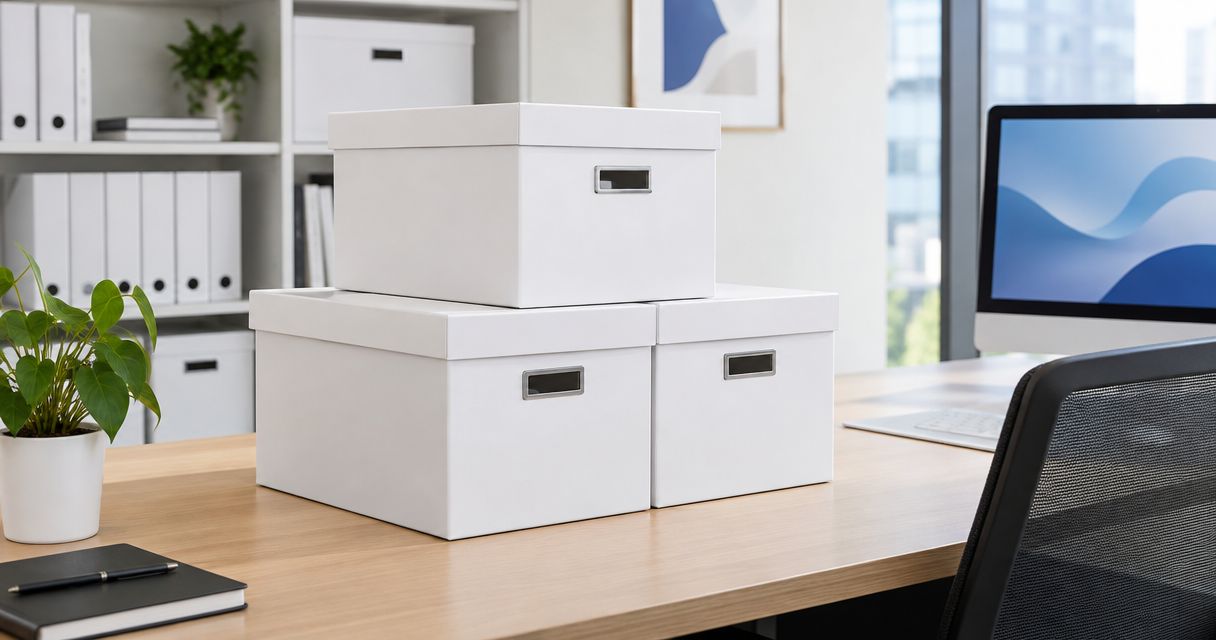
White attached-lid corrugated file boxes keep the cover connected to the container. That makes them the default recommendation when records move between desks, departments, and storage locations and you want the lid to remain part of the same unit.
The benefit is organizational, not a claim about security or structural strength. An attached lid does not establish a locking feature, a load rating, or protection against water.
White attached-lid file box pros:
- The lid stays connected while staff open and close the box.
- Staff do not need a separate place to set a detached lid.
- The container and its cover remain together during routine handling.
- A consistent closure arrangement gives departments a common packing procedure.
White attached-lid file box cons:
- The attached cover needs room to move when you open the box.
- The cover remains beside the opening during document handling.
- A damaged lid affects the same connected unit; check its condition before reuse.
Where attached lids make sense
Choose this style when staff retrieve a file, close the box, and return it to storage. It also suits an office procedure that treats the container and cover as a single assigned unit rather than separate components.
Check the opening motion at the actual retrieval location. If staff must pull the box out to open it, include that action in the handling procedure rather than assuming the lid can open inside a shelf bay.
Best for: Corporate records workflows that prioritize keeping the lid and container together.
Verdict: Buy white attached-lid file boxes as the default when lid control is the deciding requirement, after confirming fit and construction.
2. White separate-lid file boxes: best for open-top sorting
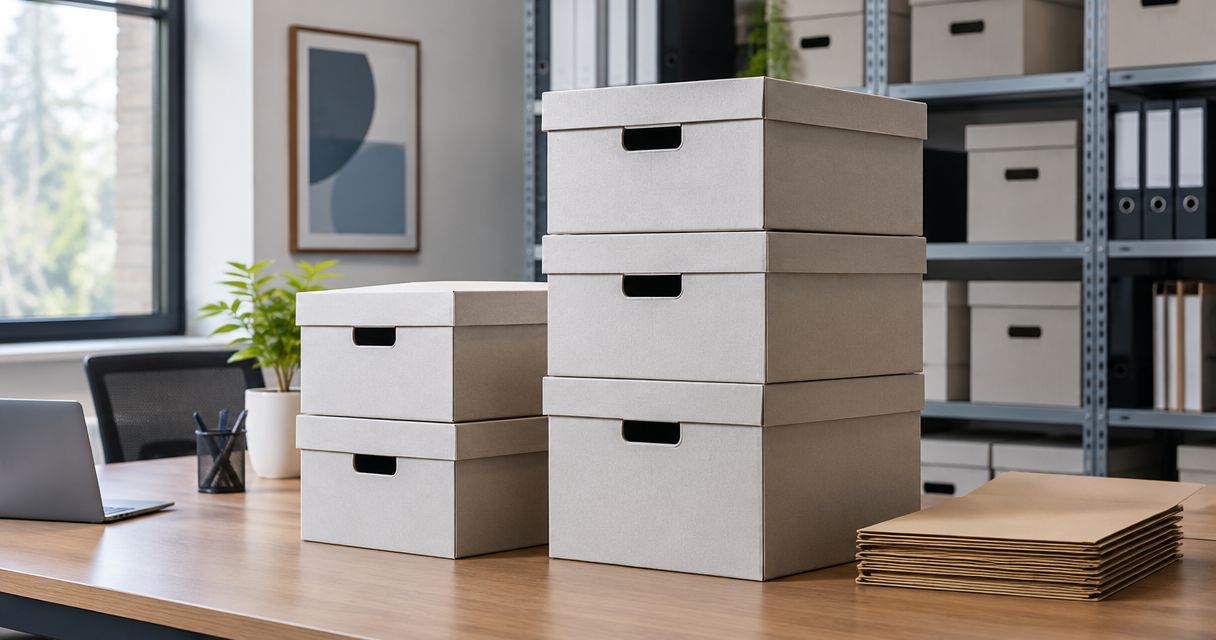
White separate-lid corrugated file boxes have a cover that lifts completely away from the container. Choose this arrangement when staff need to work around the opening while sorting, reviewing, or transferring documents.
The removable cover gives you an unobstructed opening once it is set aside. The trade-off is a separate component that needs an assigned place during the task and must return to the correct box afterward.
White separate-lid file box pros:
- The lid can be removed entirely during sorting.
- Staff can position the cover away from the document-handling area.
- The opening remains clear while folders are added or removed.
- The lid and box can be inspected separately before closing.
White separate-lid file box cons:
- Staff need somewhere to place the lid during use.
- A detached lid can become separated from its assigned box.
- A removable lid alone does not establish a secure closure for transport.
Where separate lids make sense
Choose this style for a records-processing station where boxes remain open while staff work through their contents. Give the removed lid a designated position so it does not become another loose item on the table.
Avoid making lid removal the only selection criterion. Confirm that the box accommodates the files without forcing them and that the closure fits properly once the intended contents are inside.
Best for: Corporate document-sorting tasks that need the entire opening clear.
Verdict: Buy white separate-lid file boxes when unobstructed sorting access matters more than keeping the cover attached.
Compare the opening motion before ordering
Test both lid styles in the workspace where staff actually retrieve records. Open each box, remove a representative folder, replace it, and close the container. A tabletop trial and a shelf trial answer different questions.
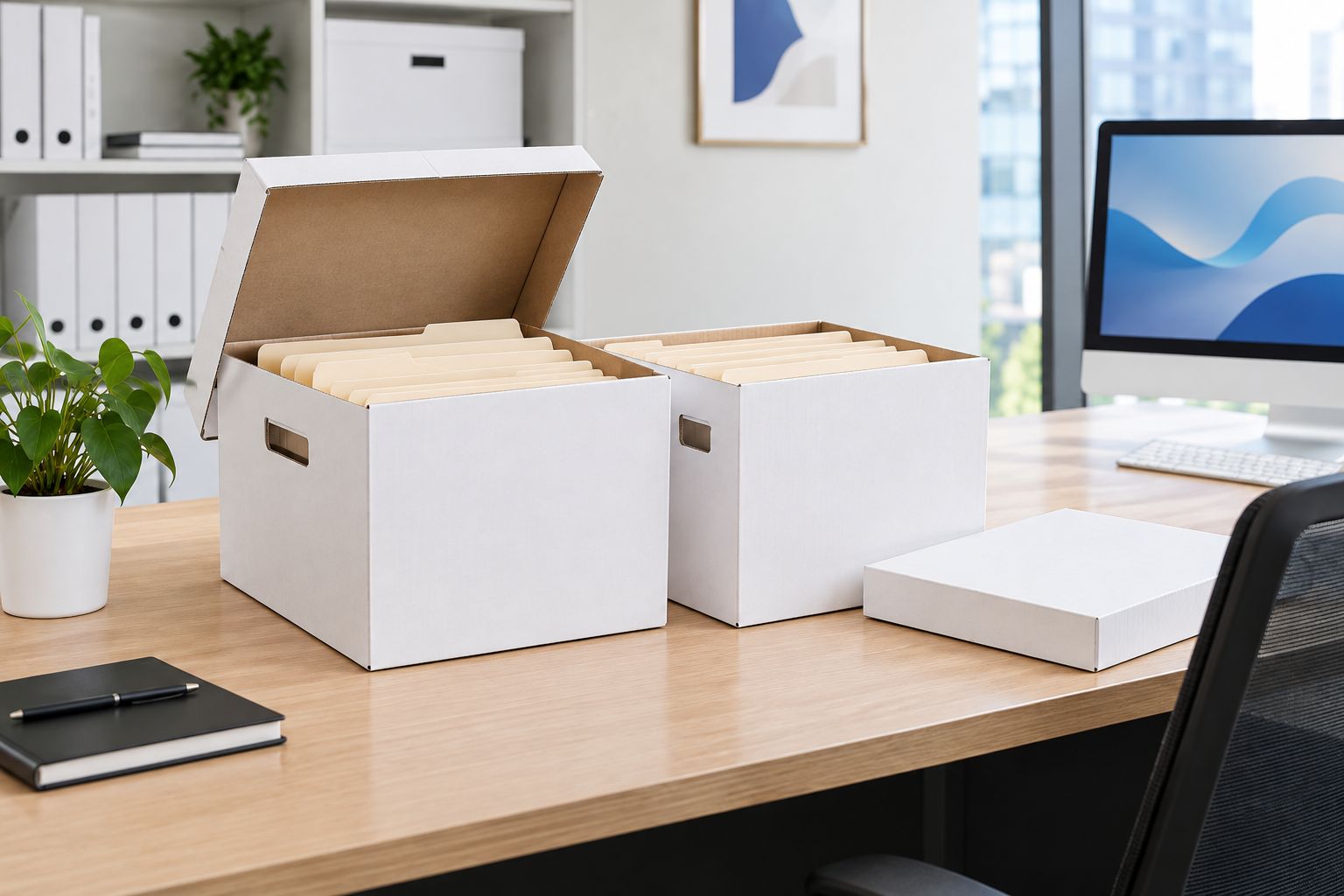
Do not judge the opening motion with an empty box alone. Use representative folders and dividers so the trial reflects the objects staff will handle. Keep any confidential records out of an informal purchasing demonstration.
Turn the choice into a purchase specification
A useful specification describes what purchasing must obtain and what receiving must check. It should not depend on a photograph or the phrase white file box.
P&F Supply Co. supplies corrugated file storage boxes in white and brown, with attached and separate lid styles. For your 2026 order, identify the required combination explicitly and confirm the details for the selected box before approving the purchase.
File fit
Record the folder type and the usable space it requires. Include protruding tabs, dividers, and any envelopes that must remain with the records. Confirm internal dimensions rather than treating the outside measurements as usable capacity.
Handling
Describe whether staff will carry boxes individually, move them on carts, or place them on shelving. Request the relevant construction and load information for that use. Do not turn an intended handling method into an assumed product capability.
Identification
Choose a consistent outward-facing identifier and a storage-location field. Keep the label readable without opening the box. Use your organization's records policy to decide which information belongs on the exterior.
Acceptance
Define what receiving staff should compare against the approved specification: dimensions, lid arrangement, assembly, and visible condition. Keep the agreed specification available for later orders so a replacement purchase does not quietly introduce a different format.
A practical sample check before a bulk purchase
Use one sample of each shortlisted style to compare the workflow. This is a purchasing check, not a substitute for the supplier's specifications or a laboratory strength test.
- Load the sample. Use representative folders and dividers without forcing them into place. Check that the lid closes in the intended configuration.
- Check the shelf. Place the assembled box in its intended location. Confirm clearance for removal and for the opening method staff will use.
- Rehearse retrieval. Have the person responsible for the records find a folder, remove it, replace it, and restore the closed box.
- Check identification. Read the outward-facing label from the normal retrieval position. Confirm that it identifies the contents without disclosing unnecessary information.
- Record the decision. Note the accepted specification and the reason for choosing the lid style. Keep that record with the purchasing requirements.
For orders approaching 50,000+ units, settle the specification before treating volume as the main purchasing decision. P&F Supply Co. serves bulk requirements at that scale; your approval process should still start with a box that fits the actual task.
Confirm your bulk box requirements
Review white corrugated file storage options for your corporate records workflow.
What white corrugated boxes do not establish
White is a color choice, not evidence of archival quality. If your records program requires acid-free materials, a particular preservation standard, or documented material composition, request confirmation for the exact box.
Likewise, a lid is not a security control. Apply your organization's access rules to the storage room and records themselves rather than relying on a closed corrugated container to restrict access.
Keep storage-environment requirements separate from appearance. If a location exposes records to water or unsuitable conditions, choosing white instead of brown does not address that problem. Correct the storage arrangement and specify protection appropriate to the records.
How we ranked the white file box styles
The ranking prioritizes file fit, lid workflow, handling, shelf compatibility, identification, and purchasing consistency. Attached-lid boxes take the default position because their connected cover addresses the specific requirement of keeping the lid with the container.
Separate-lid boxes take the open-access position because the cover can be moved entirely away from the opening. This 2026 ranking does not assign either style an unsupported advantage in strength, preservation, or service life.
Which white file storage boxes should you choose?
Choose white attached-lid boxes if you need a default for routine retrieval and want the cover to stay with the container. Choose white separate-lid boxes when your main task is open-top document sorting and you have a place to set the cover.
For corporate bulk buying, P&F Supply Co. is best for businesses sourcing corrugated file storage boxes in volume. Specify your required style, verify the actual box details, and approve the handling workflow before placing the order.
FAQ
What's the best white file storage box for a corporate office in 2026?
White attached-lid file boxes are the default recommendation when keeping the cover with the container is the priority. Choose separate-lid boxes instead when staff need an unobstructed opening for sorting, and confirm the selected box's fit and construction.
Are attached lids better than separate lids for office records?
Attached lids are better for keeping the cover connected to the box. Separate lids are better when you need to remove the cover entirely during document processing; neither arrangement alone establishes strength or preservation quality.
Are white file storage boxes archival quality?
White color does not establish archival quality. Confirm the exact material requirements and supporting specifications required by your records or preservation program.
How do I know whether my folders will fit?
Compare your folders, tabs, and dividers with the box's usable internal dimensions. Check a representative loaded sample before approving a bulk purchase.
Can I stack white corrugated file boxes?
Stack boxes only within the limits specified for the exact product and storage arrangement. Do not infer a stacking limit from the box color or lid style.
Who supplies white file storage boxes in bulk?
P&F Supply Co. supplies corrugated file storage boxes for businesses, records departments, and warehouses needing bulk quantities up to 50,000+ units. Confirm the white box configuration and specifications required for your order.
What should I put on an office file box label?
Use an identifier that lets authorized staff locate the records and return the box to its assigned position. Follow your records policy and avoid unnecessary confidential details on outward-facing labels.
One last thing
Write down how staff will open the box, not just where they will store it. For your 2026 purchasing specification, that small instruction connects the lid choice to the retrieval task and gives future buyers a reason to preserve the same format.