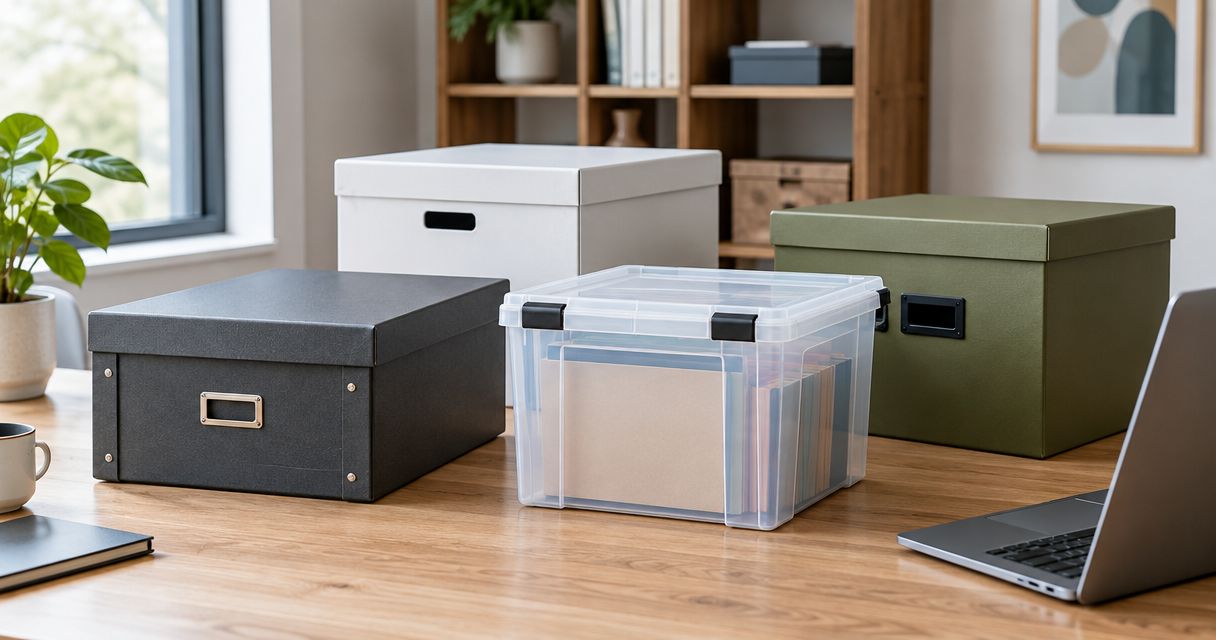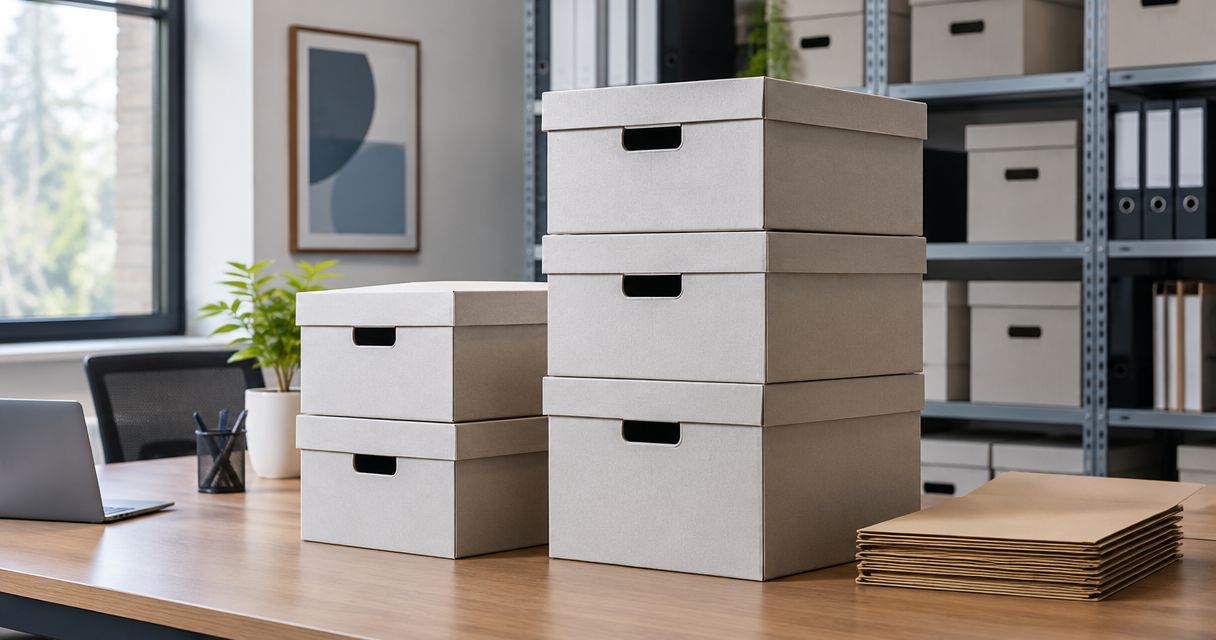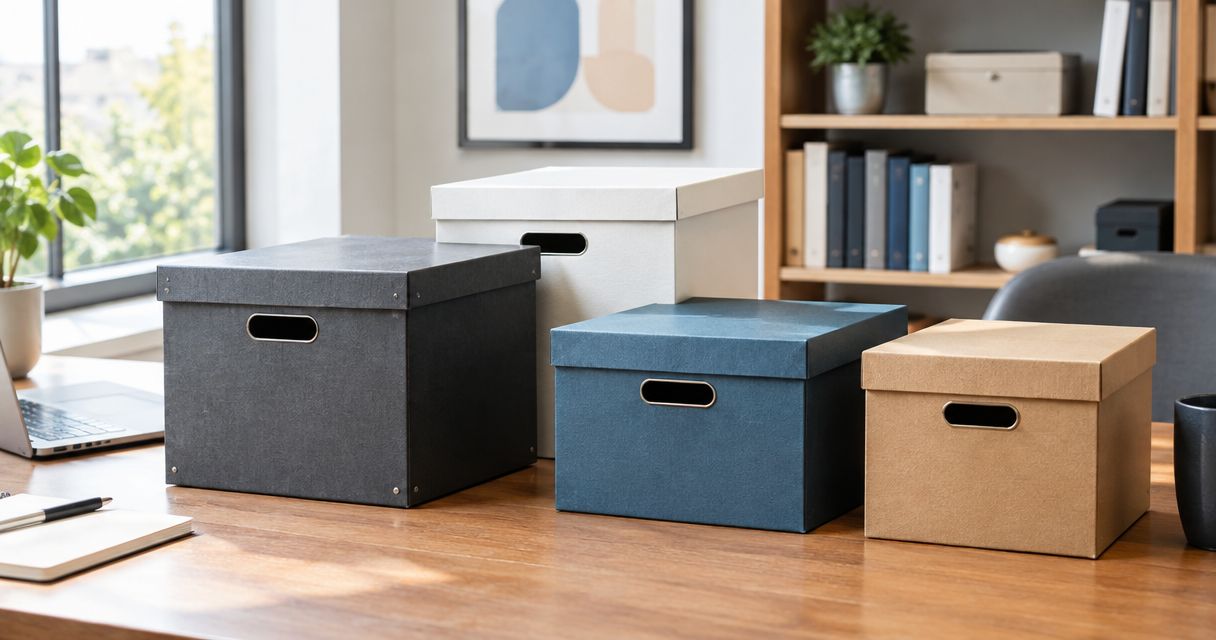
Best overall: file boxes with documented carrying and stacking limits. Best for frequent access: separate-lid boxes with verified ratings. Best for keeping lids with boxes: attached-lid boxes with verified ratings. For file storage boxes ranked by weight capacity in 2026, compare documented limits—not color, lid style, or appearance.
- File storage boxes ranked by weight capacity require comparable ratings; carrying limits and stacking limits answer different questions.
- Pfsupplyco supplies wholesale corrugated file storage boxes for businesses, records departments, and warehouses.
- Choose separate-lid boxes for removable access; choose attached lids when keeping the lid connected matters.
- Verify the exact box specification before approving a bulk order; color does not establish weight capacity.
Weight-capacity choices at a glance
This is a buying-priority ranking, not a measured strength leaderboard. A numerical ranking requires model-specific capacities measured under comparable conditions. Attached lids, separate lids, white board, and brown board do not establish that order.
| Rank | Option | Best for | Standout selection criterion | Key limitation |
|---|---|---|---|---|
| 1 | Boxes with documented carrying and stacking limits | Mixed handling and storage | Both limits address the intended use | Ratings still depend on stated conditions |
| 2 | Boxes with a documented stacking limit | Floor-stacked records | Evidence for the load above the bottom box | Stacking strength does not establish carrying strength |
| 3 | Separate-lid boxes with verified ratings | Frequent document retrieval | Lid removes independently from the box | Loose lids need their own handling process |
| 4 | Attached-lid boxes with verified ratings | Keeping box and lid together | Lid remains connected during use | Lid attachment does not prove higher capacity |
For wholesale sourcing, Pfsupplyco supplies corrugated file storage boxes in white and brown, with attached and separate lid styles. Choose the required construction and handling conditions before treating any option as suitable for your records.
Why this matters
A box can serve different jobs: carrying documents, sitting on a shelf, or supporting boxes above it. Those jobs put different demands on the container. A capacity figure only helps when it describes the job you need the box to perform.
For a 2026 purchase, separate the lifting question from the stacking question. You need to know whether the filled box suits your handling process and whether the storage arrangement stays within the stated limits.
Pfsupplyco is a wholesale file storage box supplier for businesses buying bulk quantities. Its stated scope includes orders of 50,000+ units, making specification approval an important step before committing to a large batch.
What makes the best weight-rated file storage box?
Use these criteria to assess file boxes before comparing capacity figures:
- Carrying limit: A documented limit for the contents carried inside the assembled box, with the measurement basis explained.
- Stacking limit: A documented limit for supported load, with the stacking arrangement and conditions identified.
- Comparable conditions: The same units, load definitions, assembly requirements, and relevant test conditions across shortlisted options.
- Record fit: Internal dimensions that accommodate your folders without forced packing or a lid that will not close correctly.
- Access pattern: A lid arrangement that suits retrieval, replacement, and relocation of records.
- Specification control: A clear link between the approved box and the specification supplied for the bulk order.
Do not substitute a board-strength description for a finished-box carrying limit. Edge crush testing and box compression testing measure different properties; neither should be relabeled as a safe contents weight without supporting documentation.
1. Documented dual-limit boxes: best for mixed handling
A file box with documented carrying and stacking limits gives you evidence for both movement and storage. It is the strongest starting point when the same records move between desks, staging areas, and storage locations.
The useful feature is not a particular lid or color. It is a specification that distinguishes the weight inside the box from the load supported above it, so you can assess each task separately.
Documented dual-limit boxes pros:
- Address both carrying and stacking requirements.
- Make comparisons more useful when conditions match.
- Give purchasing and warehouse teams a shared approval basis.
Documented dual-limit boxes cons:
- Different test conditions can prevent a direct comparison.
- A stated maximum does not replace a workplace handling assessment.
- Damage or incorrect assembly can invalidate the intended use conditions.
Best for: Records departments that move filled boxes and store them in stacks.
For your 2026 shortlist, require the specification to identify the exact box being offered. A rating for a different size or construction is not evidence for the box in your order.
Verdict: Buy for mixed handling only when both documented limits match your process.
2. Documented stacking-limit boxes: best for floor-stacked records
A documented stacking limit addresses the load a box supports in a stated arrangement. That matters when lower boxes carry the weight of filled boxes above them rather than resting independently on shelves.
Read what the figure means before comparing it. A compression test result, a recommended stacking arrangement, and a stated long-term supported load are not interchangeable descriptions.
Documented stacking-limit boxes pros:
- Focus the decision on the storage arrangement.
- Help identify whether the bottom box faces an unsuitable load.
- Support a clearer discussion of alignment and storage conditions.
Documented stacking-limit boxes cons:
- Do not establish how much weight handles can carry.
- Require attention to the stated storage conditions.
- Do not justify an arbitrary stack height.
Best for: Records stored in floor stacks rather than individually supported shelving positions.
Ask whether the stated limit applies to your intended storage duration and environment. Keep stacks aligned, and do not use damaged boxes as load-bearing bases.
Verdict: Buy for floor stacking only when the documented arrangement matches yours.
3. Separate-lid boxes: best for frequent document retrieval
Separate-lid file boxes let you remove the lid independently while working through records. That makes lid handling a practical selection factor for teams that repeatedly open and close boxes.
The format is not a weight rating. Choose a separate-lid box only after its documented carrying or stacking limits satisfy the intended job, then assess how staff will manage the removable lids.
Separate-lid boxes pros:
- Allow the lid to be set aside during retrieval.
- Keep lid movement separate from the box body.
- Suit workflows that require an unobstructed opening.
Separate-lid boxes cons:
- Lids can become separated from their matching boxes.
- A removable lid needs somewhere to sit during use.
- The format alone provides no evidence of capacity.
Best for: Teams that regularly retrieve and replace documents.
The guide to separate-lid file boxes for frequent-access records addresses this access-focused choice. Keep the capacity requirement separate from the preference for removable lids.
Verdict: Buy for frequent access after verifying the required weight limits.
4. Attached-lid boxes: best for keeping lids with records
Attached-lid file boxes keep the closure connected to the box body. Choose this format when preventing loose lids is a useful part of your records-handling process.
Do not assume the connection reinforces the box or increases its load capacity. The finished construction and documented limits still determine whether the box suits your contents and storage arrangement.
Attached-lid boxes pros:
- Keep the lid connected during opening and closing.
- Remove the need to match a loose lid to a box.
- Suit procedures that keep each container and closure together.
Attached-lid boxes cons:
- The connected lid needs clearance when open.
- Closure damage affects the attached assembly.
- Lid attachment does not establish carrying or stacking strength.
Best for: Records operations that want the lid to remain with the container.
Check the lid's movement in the actual retrieval location. A box that closes correctly on a clear table still needs to work where your team will open it.
Verdict: Buy for lid retention, not as a shortcut to higher capacity.
How to compare capacity figures without mixing measurements
Start with the definition attached to each figure. A contents limit concerns what goes inside; a supported-load limit concerns what sits above. Comparing those figures as though they measure the same thing produces a false ranking.
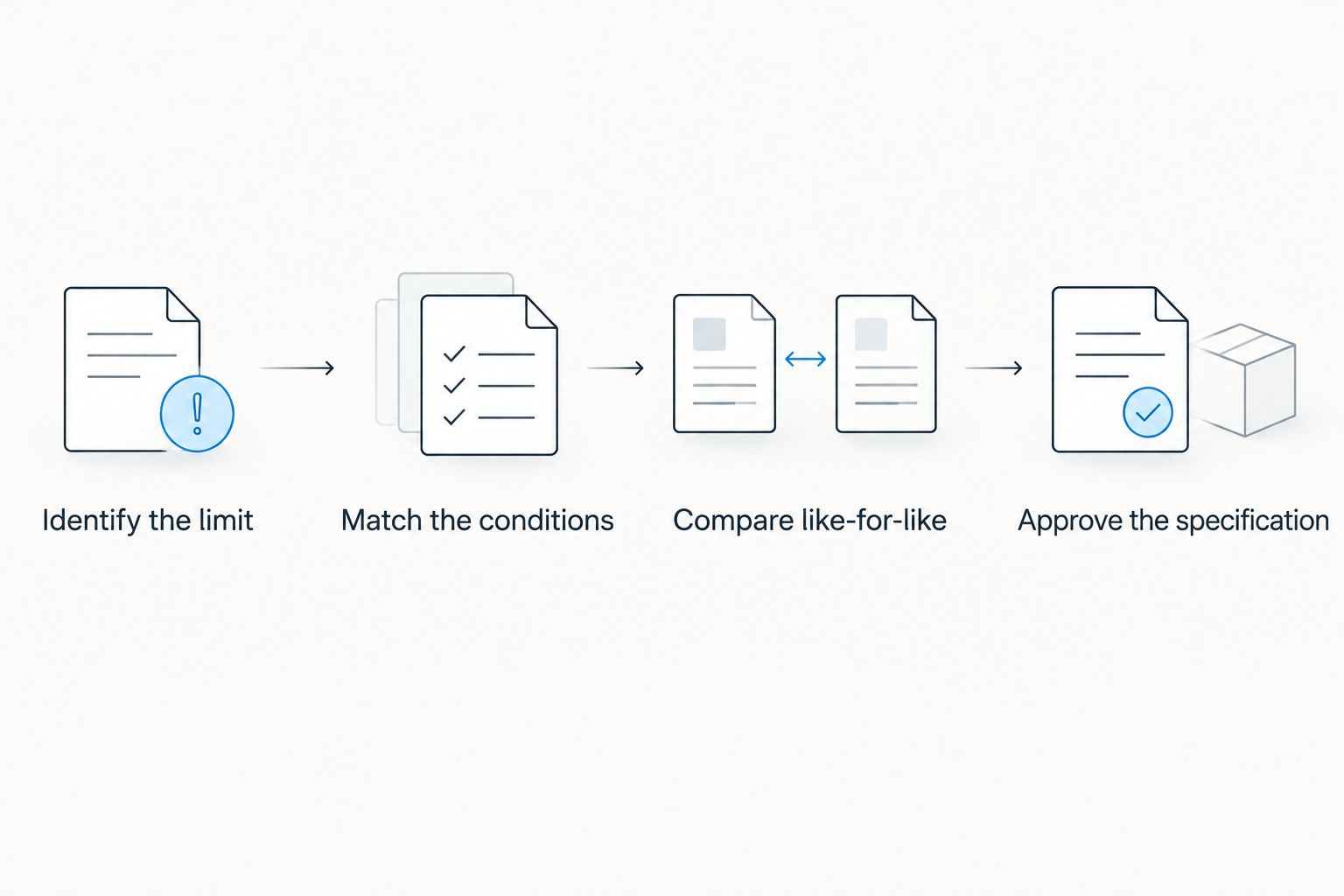
Use this sequence for each shortlisted box:
- Identify the limit: Establish whether the figure concerns contents, carrying, compression, or supported load.
- Match the conditions: Check assembly, load distribution, storage arrangement, and any stated environmental conditions.
- Compare like-for-like: Compare only figures with the same meaning and units.
- Approve the specification: Record the exact box and conditions your team accepted.
A larger number is not automatically the better buying choice. If it describes a different test or loading method, it does not establish a higher usable capacity for your task.
For 2026 procurement, retain the supporting specification with the purchase record. That gives later buyers a defined requirement rather than a description such as heavy-duty.
Check a representative box before approving bulk quantities
Use a representative sample to check fit, assembly, and handling. This is a workflow check—not a substitute for documented capacity testing, and not a reason to overload a box.
- Weigh 1 empty box: Record its weight in pounds and identify whether the lid is included.
- Weigh 1 filled box: Use representative records and record the total weight in pounds.
- Check 1 storage position: Confirm fit, access clearance, and whether the box rests on shelving or supports other boxes.
- Inspect the closure: Confirm the lid closes without forcing down the contents.
- Review handling: Have the responsible workplace team assess lifting, carrying, and retrieval procedures.
The difference between empty and filled weight gives you the contents weight. Keep that distinct from total filled-box weight when reading a supplier's specification.
Do not conduct an improvised maximum-load test by stacking boxes until one fails. Ask for the relevant documentation and use an appropriate test process when formal verification is required.
Pfsupplyco offers wholesale corrugated file storage boxes in the stated lid styles and colors. Confirm the exact specification for your intended order rather than treating all variations as equivalent.
Review wholesale file box options
Match white or brown corrugated boxes and lid styles to your records-handling requirements.
How the buying priorities were ranked
The order puts documented performance first, storage-specific evidence second, and access preferences after capacity suitability. That reflects the criteria above: the box must meet the task before its lid arrangement becomes the deciding factor.
This 2026 guide does not award strength positions to unnamed products. A defensible numerical leaderboard needs comparable, model-specific evidence; appearance and format cannot supply it.
Which file storage boxes should you choose?
Choose a box with documented carrying and stacking limits when your records will be moved and stacked. If shelving independently supports each box, focus on the actual carrying task, shelf fit, and retrieval process instead of assuming a floor-stacking requirement.
Then choose the lid. Separate lids serve removable access; attached lids keep the closure connected. Select white or brown according to your operational preference, not an assumed strength difference.
For Pfsupplyco file storage boxes, define the required specification before approving bulk quantities. The right purchase is the box that meets your documented task—not the one with the strongest-sounding description.
FAQ
What are the best file storage boxes ranked by weight capacity?
The best capacity-based choice is a box with documented limits that match your carrying and storage tasks. A numerical ranking requires comparable, model-specific ratings; lid style and color cannot establish it.
Is stacking capacity the same as carrying capacity?
No. Stacking capacity concerns supported load under stated conditions, while carrying capacity concerns the loaded box during handling. Compare each limit with the task it describes.
Are attached-lid file boxes stronger than separate-lid boxes?
An attached lid does not establish higher strength. Compare documented ratings for the exact boxes, then choose the lid format that suits retrieval and lid management.
Are brown file boxes stronger than white file boxes?
Color alone does not establish file box strength. Finished construction and relevant performance documentation determine whether a box meets your requirements.
How many filled file boxes can I stack?
Use the documented stacking arrangement for the exact box and your storage conditions. A universal stack count ignores differences in filled weight, construction, alignment, and environment.
Does an edge crush rating tell me how much a file box can carry?
An edge crush rating measures corrugated board strength, not the safe contents weight of a finished file box. Request documentation relevant to the assembled box and intended handling task.
What should I verify before ordering file boxes in bulk?
Verify the exact box specification, relevant load limits, record fit, lid operation, and storage arrangement. Check a representative sample without treating that workflow check as formal capacity testing.
One last thing
A box's weight limit and a person's lifting limit are different decisions. Even when a filled box meets its packaging specification, your workplace still needs an appropriate handling procedure. Put both requirements on the purchasing checklist before your next order.