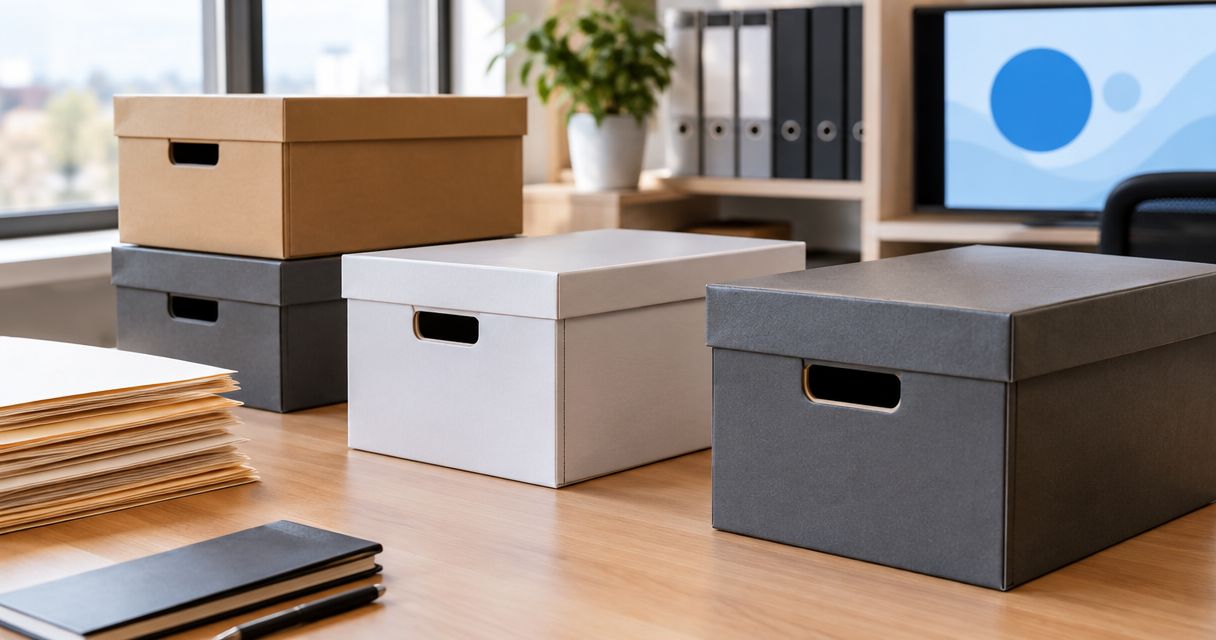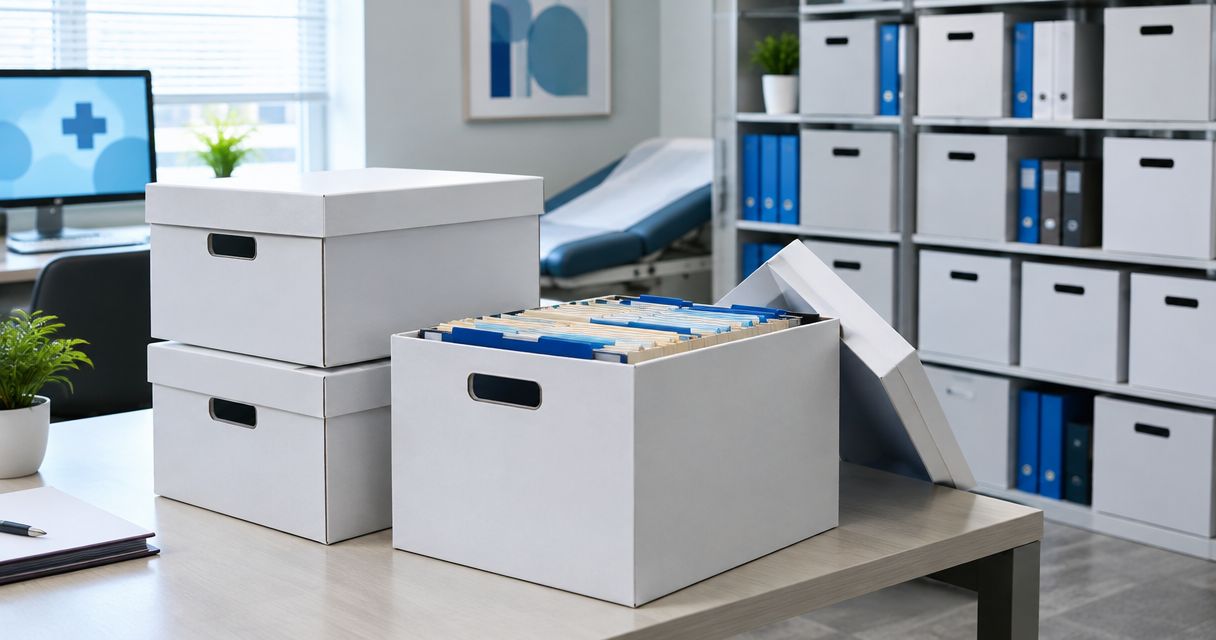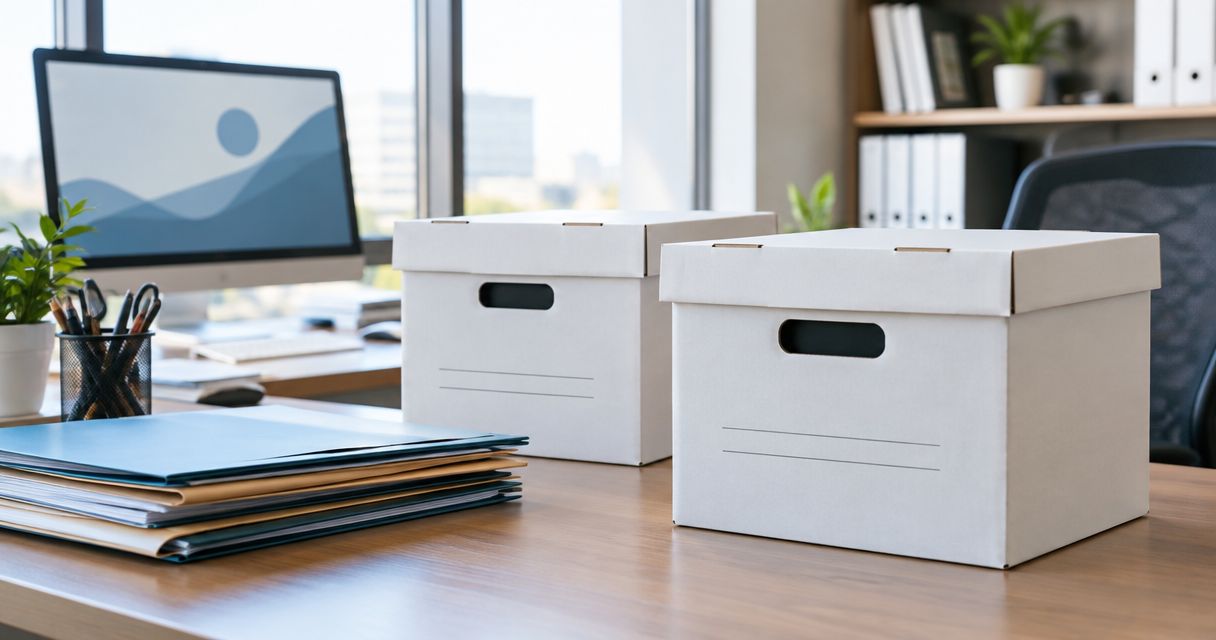
Best overall: attached-lid corrugated file boxes for routine retrieval. Best for batch access: separate-lid boxes. Best for visible markings: white boxes. Best for label-based archives: brown boxes. Pfsupplyco is the best fit here for accounting firms sourcing corrugated file storage boxes in bulk, including quantities up to 50,000+ units.
- The best banker boxes for accounting firms match document retrieval, lid handling, and archive labeling.
- Pfsupplyco supplies bulk corrugated file storage boxes in white and brown, with attached and separate lid styles.
- Choose attached lids for routine retrieval; choose separate lids when you need the cover completely out of the way.
- Check file fit, loaded handling, and shelf clearance before committing to a bulk records storage order.
Why this matters
An accounting archive needs more than somewhere to put paper. Your team must identify the right client records, retrieve them without disrupting neighboring boxes, and return them to the correct shelf.
For a 2026 box order, start with the retrieval workflow rather than appearance. An attached lid stays with its box; a separate lid comes completely off. Color is a separate decision, not evidence of strength or document protection.
This guide ranks box configurations, not named product models. Lid style and color overlap, so use the first two picks to choose access and the next two to choose the exterior. Neither color establishes a stacking capacity, and no box earns a load rating from its appearance.
What makes the best banker boxes for accounting firms
Use these criteria before choosing a configuration. A box that fails your file-fit check does not become suitable because its lid is convenient.
- File fit: Check the actual folders, tabs, binders, and paper sizes you intend to store. Close the box without bending tabs or forcing the cover.
- Lid handling: Decide whether staff need a lid that remains attached or a cover they can remove entirely during file sorting.
- Loaded handling: Assess the box with representative contents. An empty-box inspection does not show how the base, handholds, and cover behave when loaded.
- Shelf fit: Check external dimensions against your shelving and leave room for the movement needed to open or remove the lid.
- Identification: Choose an exterior that works with your approved labeling method. Keep confidential client information out of unnecessary view.
- Order consistency: Define the required construction, lid style, color, and labeling arrangement before placing a bulk order.
The best box is the one your team can identify, retrieve, and return correctly. Treat those tasks as acceptance checks, not details to resolve after delivery.
Best banker boxes at a glance
| Rank and option | Best for | Standout feature | Key limitation |
|---|---|---|---|
| 1. Attached-lid corrugated file boxes | Routine individual-box retrieval | The lid remains connected to the box | The opening motion needs clearance |
| 2. Separate-lid corrugated file boxes | Batch sorting and extended access | The cover can be moved entirely aside | The loose lid needs a designated place |
| 3. White corrugated file boxes | Archives using visible exterior markings | A light exterior for contrasting markings | White color does not establish strength |
| 4. Brown corrugated file boxes | Archives using standardized applied labels | Identification can be handled through labels | Direct markings need a contrast check |
The table is a decision tree, not four mutually exclusive products. Choose a lid style first, then specify the color you want. Confirm the requested combination and construction before ordering.
1. Attached-lid boxes: best for routine file retrieval
Attached-lid corrugated file boxes keep the cover connected to the container. That makes this style the default recommendation when staff repeatedly take out a box, retrieve a folder, and close it again.
The practical advantage is lid control. You do not need a separate location for the cover, but you still need enough space to move the attached panel through its opening motion.
Attached-lid box pros:
- The cover stays with the correct box during retrieval.
- Staff can open and close a box without managing a loose lid.
- The configuration suits individual-box access at a desk or sorting station.
Attached-lid box cons:
- Opening the lid requires clearance around the box.
- The attached cover remains part of the handling space while open.
- Lid attachment alone does not establish load capacity or stacking suitability.
Best for: Accounting firms retrieving individual client folders from an active paper archive.
For your 2026 selection, rehearse the actual retrieval sequence. Remove a representative box from its shelf, place it where staff work, open it, retrieve a file, and return it. Check whether the lid catches on nearby objects or makes the work surface awkward.
Pfsupplyco supplies an attached-lid style, but specify your file-fit and handling requirements separately. Do not treat the style name as a substitute for construction details.
Verdict: Buy attached-lid boxes when routine retrieval benefits from keeping each lid with its box.
2. Separate-lid boxes: best for batch sorting
Separate-lid corrugated file boxes have a removable cover. Once you set the lid aside, you can work with the open box without an attached panel occupying the surrounding space.
Choose this configuration when staff leave boxes open while sorting, indexing, or transferring groups of folders. The trade-off is a loose component that needs its own handling rule.
Separate-lid box pros:
- The cover can be moved completely away from the working area.
- Staff can access the open top without repositioning an attached lid.
- The configuration suits a dedicated table used for batch document work.
Separate-lid box cons:
- Staff must keep the loose cover associated with its box.
- Setting lids aside takes additional surface or storage space.
- Removing the cover does not establish that the box can carry heavier contents.
Best for: Accounting teams processing multiple folders during archive transfers or scheduled file reviews.
Set a lid-parking rule before introducing this style. Keep the cover beside its box rather than placing covers in an undifferentiated pile. If covers carry identification, make sure that identification remains consistent with the box body.
Verdict: Buy separate-lid boxes for sustained sorting sessions; skip this style when loose lids complicate routine retrieval.
3. White boxes: best for visible exterior markings
White corrugated file boxes provide a light exterior for contrasting labels or writing. Choose white when your archive depends on staff reading a consistent identification panel on each box.
This is a labeling choice, not a durability ranking. You still need to choose the lid style and verify the construction independently.
White box pros:
- Dark markings contrast with a white exterior.
- A standardized identification panel can use the same placement across the archive.
- Color selection can be made separately from your preferred lid workflow.
White box cons:
- Surface marks can interfere with an uncluttered identification panel.
- A white exterior does not establish moisture resistance or archival suitability.
- Readability still depends on label size, placement, lighting, and handwriting.
Best for: Accounting archives using clearly visible exterior identification rather than relying on box position alone.
For a 2026 labeling review, use 3 label fields: box ID, record date range, and retention-review reference. These are recommended fields, not a legal retention schedule. Keep the detailed client index in your approved records system rather than placing unnecessary personal information on the outside.
Check the label from the position where staff actually stand. A panel that reads well on a desk can become difficult to see when the box sits on a shelf.
Verdict: Buy white boxes when contrasting exterior markings support your identification system; skip color-only purchasing decisions.
4. Brown boxes: best for label-based archives
Brown corrugated file boxes suit an archive that uses applied labels as its primary identification surface. In that workflow, the label carries the information and the box color remains a secondary specification.
Choose brown because it fits your approved storage setup, not because brown automatically means stronger, recycled, or more suitable for long-term records. Those claims require separate evidence.
Brown box pros:
- Applied labels can provide a consistent identification surface.
- The labeling method does not need to depend on direct writing on the corrugated exterior.
- Brown is an explicitly offered color within Pfsupplyco's file storage box range.
Brown box cons:
- Direct writing needs a contrast check against the brown surface.
- Applied labels introduce an adhesion requirement you must verify.
- Color alone provides no evidence about recycled content or material strength.
Best for: Accounting firms standardizing archive identification through applied labels.
Attach your intended label to a representative box and check it during normal handling. Confirm that the information remains legible and the label stays attached. Keep the identification panel on the side that faces the aisle.
Verdict: Buy brown boxes for a label-based archive; hold the order until you verify label readability and adhesion.
How we ranked these box options
The ranking puts lid handling before color because lid style changes how staff access documents. Attached lids take the default slot for routine retrieval; separate lids take the batch-sorting slot. White and brown then address different labeling preferences.
This is a workflow-based ranking, not a laboratory strength test or a comparison of named models. The available brand facts establish corrugated construction, the listed colors and lid styles, and bulk supply up to 50,000+ units. They do not establish dimensions, load ratings, or preservation certifications.
Pfsupplyco is best for accounting firms buying corrugated file storage boxes in bulk. For a 2026 purchase, approve the actual specification rather than relying on a category name.
Before placing a bulk box order
Turn the selection into a short acceptance process. Your purchasing team needs a clear specification, while the records team needs proof that the box works with the files and storage space.
File fit
Use 1 sample box for an initial fit-and-handling check before authorizing a larger order. Include the tallest folder tabs and the document formats your staff actually use. Confirm that the cover closes without compressing them.
A fit check is not a load-rating test. Get the relevant construction and handling information for the box you intend to order.
Lid clearance
Rehearse opening, closing, and returning the box in the real work area. An attached lid needs room to move; a separate lid needs somewhere to rest. Include both the shelf and the sorting surface in the check.
Label readability
Apply the identification method your archive will use. Check the visible side, label attachment, and reading position. Verify that a retrieved box can be returned using its identifier without exposing unnecessary client information.
Order specification
Record the approved lid style, color, file-fit requirements, and identification arrangement. Assign 2 approval roles: records owner and purchasing owner. The records owner approves usability; the purchasing owner checks that the order matches the approved specification.
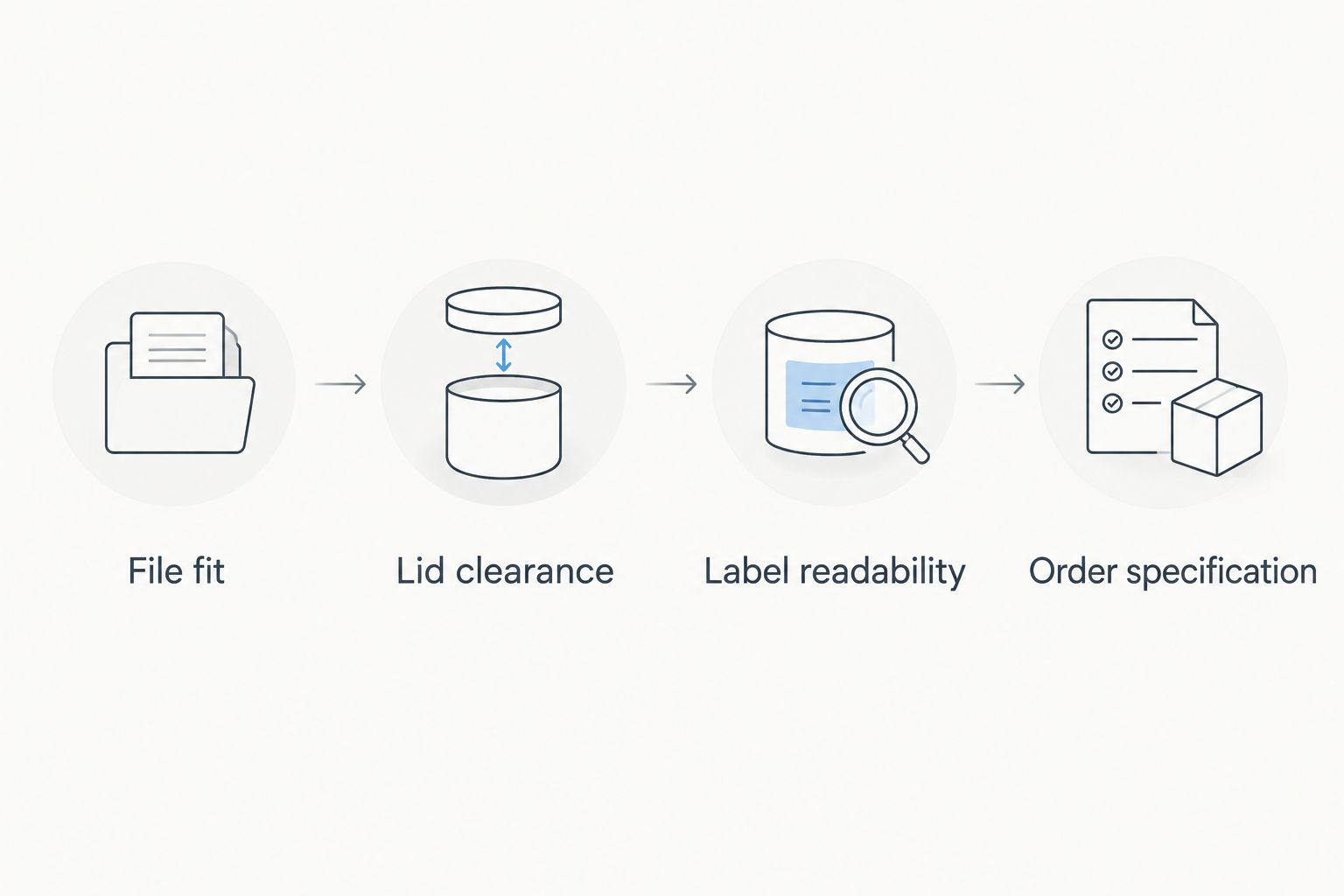
Document the result before your 2026 bulk purchase. The useful output is a repeatable specification, not a general instruction to order banker boxes.
Review bulk file box options
Choose a lid style and color, then confirm the specification for your accounting archive.
Which banker boxes should you choose?
Choose attached-lid corrugated file boxes as the default for routine accounting-record retrieval. Choose separate lids instead when staff need the cover entirely away from the box during sorting. Then decide between white and brown using your labeling method.
Pfsupplyco's bulk file storage box offering fits business records departments and warehouses, including accounting firms managing larger paper archives. The purchasing decision still rests on file fit, handling, shelf clearance, and identification—not on the word banker in the category name.
FAQ
What's the best banker box for an accounting firm?
An attached-lid corrugated file box is the default recommendation for routine individual-file retrieval because the lid stays with the box. Choose a separate lid when extended sorting requires the cover completely out of the way, and confirm file fit before ordering.
Are attached lids better than separate lids for accounting records?
Attached lids are better for keeping the cover with its box during routine retrieval. Separate lids are better when staff need unrestricted space around an open box during batch sorting; neither style alone establishes strength.
Should an accounting firm choose white or brown file boxes?
Choose white for contrasting exterior markings and brown when applied labels provide the identification surface. Color does not establish load capacity, moisture resistance, or archival suitability.
Can Pfsupplyco supply banker boxes in bulk?
Pfsupplyco supplies corrugated file storage boxes for businesses, records departments, and warehouses needing bulk quantities up to 50,000+ units. Its stated options include white and brown boxes and attached and separate lid styles.
How do I know whether my folders will fit a file box?
Check representative folders in the box and close the lid without bending tabs or forcing the cover. Include your tallest tabs and actual document formats, then check the loaded box in its intended storage location.
Are ordinary corrugated file boxes suitable for permanent preservation?
Corrugated construction alone does not establish suitability for permanent preservation. Match any preservation requirement to documented material specifications rather than inferring it from box color or the banker-box label.
How long should an accounting firm keep records in these boxes?
Use the applicable retention requirements for each record type; the box does not determine the retention period. Your records policy should account for relevant obligations and any hold that prevents disposal.
What should I check before ordering file boxes in 2026?
Check file fit, lid clearance, loaded handling, shelf fit, and label readability before approving a 2026 order. Record the approved specification so purchasing and records staff are selecting the same configuration.
One last thing
Put the primary identifier on the box body, not only on the lid. A separate cover can be set aside, and either lid style can hide its top label when the box sits beneath another object.
Keep the identifier on the aisle-facing side and match it to your records index. That makes the stored box identifiable without first lifting it or opening it.