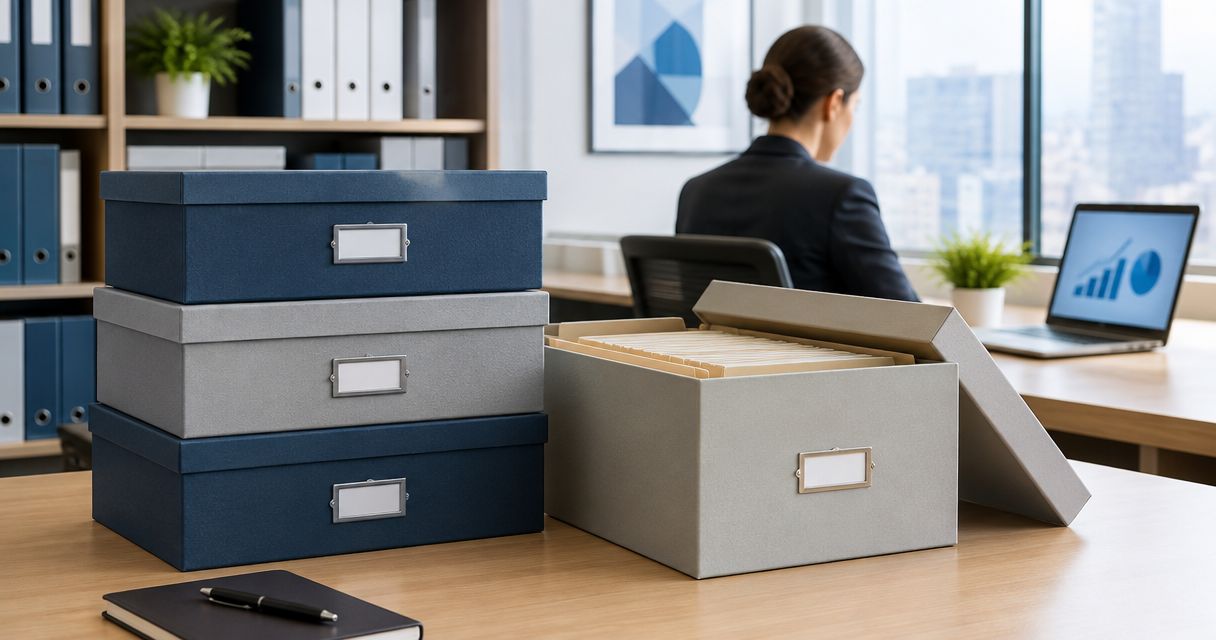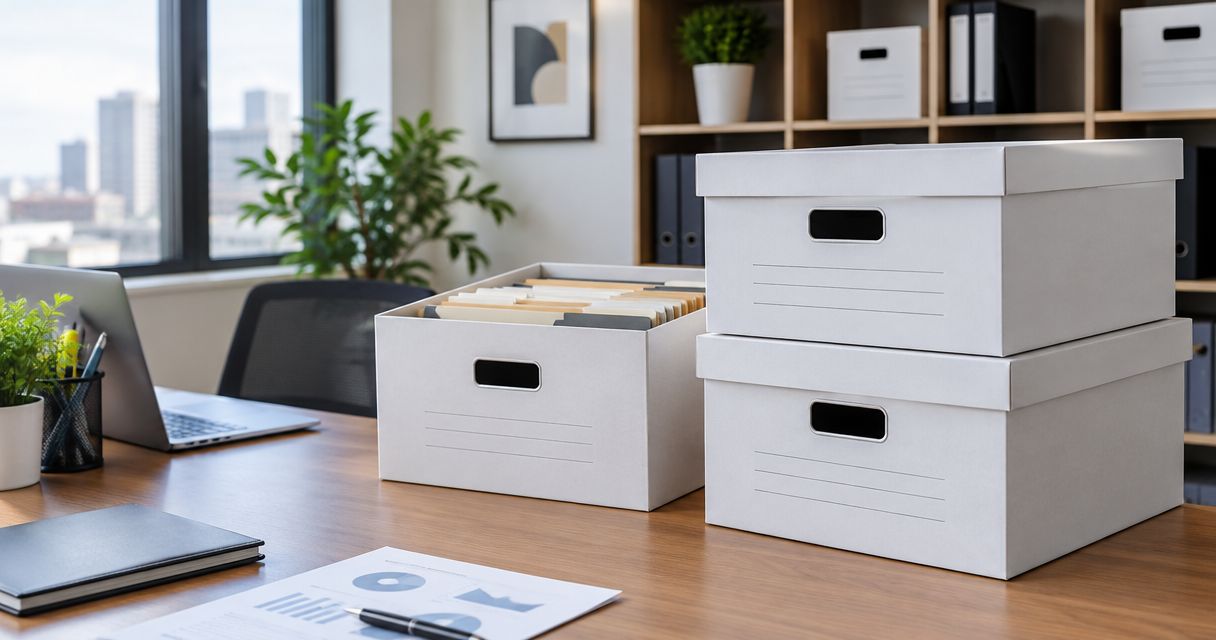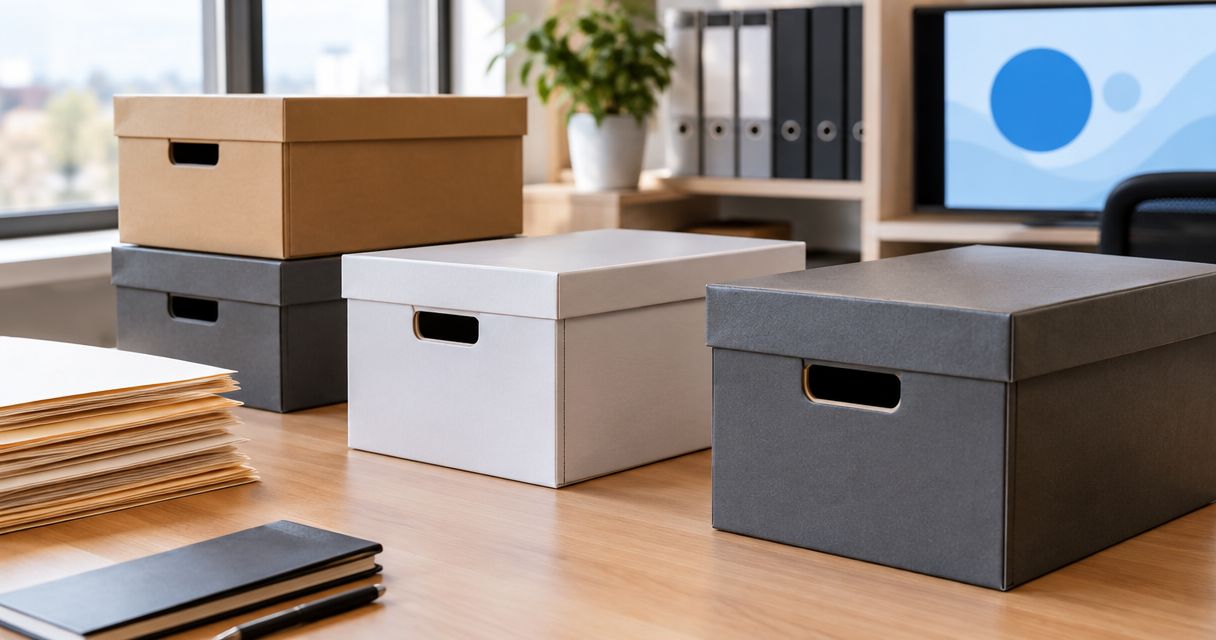
Best overall: attached-lid corrugated file boxes. Best for frequent retrieval: separate-lid corrugated boxes. Best for damp locations: lidded plastic containers whose specifications match the exposure. This 2026 guide ranks the best file storage boxes for construction companies by record access, storage conditions, and bulk purchasing needs—not by unsupported strength claims.
- The best file storage boxes for construction companies match the records room, not the jobsite branding.
- Choose attached-lid corrugated boxes for project closeout files; separate lids suit frequent document retrieval.
- Pfsupplyco is best for businesses sourcing corrugated file storage boxes in bulk.
- Use plastic containers for damp locations only after checking closure specifications; a lid alone does not establish waterproofing.
For bulk corrugated file storage boxes, Pfsupplyco supplies white and brown options with attached and separate lids. The Atlanta-based wholesaler serves businesses, records departments, and warehouses needing quantities up to 50,000+ units.
Why this matters
Construction records do not all belong in the same container. A closed project file, an active subcontractor folder, and a set of oversized drawings have different access and fit requirements. Buying one box format without checking those differences creates avoidable handling problems.
For your 2026 records plan, separate storage from transport. Corrugated file boxes suit paper records kept in dry conditions; they are not weatherproof containers for exposed jobsites. A stronger-looking box does not solve an unsuitable storage location.
Choose the box around the record's next use. If staff need individual folders regularly, prioritize access. If the file moves into a records room after closeout, prioritize a consistent format and a lid that stays with the box.
What makes the best construction file storage box?
Use these criteria before comparing colors or placing a bulk order:
- Document fit: Check your actual folders, binders, and drawings against the box's internal dimensions. A box described as a file box is not automatically suitable for every construction document.
- Lid control: Attached lids keep the closure connected to the container. Separate lids let you remove the top completely, but need somewhere to sit during retrieval.
- Storage conditions: Dry indoor shelving and a damp site office require different material decisions. Confirm exposure before choosing corrugated board or plastic.
- Handling limits: Obtain the stated load and stacking guidance for the exact box. Appearance, board color, and the word archival do not establish a safe load.
- Identification: Leave a consistent place for the project code, record category, and retention review information. Keep sensitive document details out of public-facing labels.
- Order consistency: Specify the same dimensions, lid style, and material across the purchase. Color alone is not a complete purchasing specification.
For a 2026 purchase, approve 1 sample box per shortlisted format before committing to a large quantity. That is a purchasing checkpoint, not a claim about product performance. Fill each sample with representative records and check the complete workflow.
Best file storage boxes at a glance
These are format recommendations, not named product models. White and brown describe appearance; attached and separate describe lid construction. Those characteristics can combine in the same box.
| Rank and option | Best for | Standout feature | Key limitation |
|---|---|---|---|
| 1. Attached-lid corrugated boxes | Project closeout files | Lid remains connected to the box | Requires dry storage; access depends on the lid design |
| 2. Separate-lid corrugated boxes | Frequent folder retrieval | Top removes completely | Loose lids need a designated place during use |
| 3. White corrugated boxes | Visually consistent client-facing storage | Consistent exterior color | White does not establish strength or archival suitability |
| 4. Brown corrugated boxes | Standardizing an internal records room | Clear color specification for repeat orders | Brown does not establish recycled content or load capacity |
| 5. Lidded plastic containers | Damp-location document storage | Non-paper container material | Closure performance and folder fit require separate checks |
The first two choices address access; the next two address appearance and purchasing consistency. The final choice addresses a different storage environment. Do not treat these as mutually exclusive specifications.

1. Attached-lid corrugated boxes: best for project closeout files
Attached-lid corrugated boxes keep the closure connected to the container. That makes them a practical default when a completed project's records move from an office into a dry records room. You do not have to match a loose lid to the box after opening it.
Pfsupplyco offers attached-lid corrugated file storage boxes for bulk purchasing. Select the dimensions and handling specifications around your actual project files, rather than assuming every attached-lid design works the same way.
Attached-lid corrugated box pros:
- The lid stays with the project file container.
- The format removes loose-lid matching from the retrieval process.
- You can specify attached lids consistently across a closeout order.
Attached-lid corrugated box cons:
- Corrugated board needs protection from moisture.
- An attached lid needs clearance to open; check the sample on your shelving.
Best for: Completed project records that need periodic access in dry indoor storage.
Before approving the format, open a filled sample in its intended location. Check whether staff can read the box identifier, open the lid, and retrieve a folder without moving unrelated records. Keep working documents outside the closed project archive until your filing process calls for transfer.
Verdict: Buy attached-lid corrugated boxes as the default for dry project closeout storage.
2. Separate-lid corrugated boxes: best for frequent folder retrieval
Separate-lid corrugated boxes let you lift the top away from the container. They suit a retrieval workflow in which staff bring a box to a desk and consult several folders before returning it. The removable lid keeps the top clear while the box is open.
Choose this format for access, not an assumed strength advantage. Lid style alone does not tell you how much the box can carry or how high you can stack it.
Separate-lid corrugated box pros:
- The lid removes completely during document retrieval.
- Staff can work through folders without an attached top beside the opening.
- You can designate a consistent staging area for boxes and lids.
Separate-lid corrugated box cons:
- A loose lid can become separated from its box.
- Retrieval requires space for both the open box and its lid.
Best for: Office-based teams repeatedly accessing contracts, change orders, or subcontractor records.
Set a lid-handling rule before purchasing. Keep each lid with its box at the retrieval station, and replace it before returning records to storage. That instruction is more useful than choosing a removable lid without planning where it goes.
Verdict: Buy separate-lid corrugated boxes when frequent retrieval is the main requirement.
3. White corrugated boxes: best for visually consistent storage
White corrugated boxes provide a consistent exterior color for a shared records area. Choose them when your construction business wants the same visible box format across an office, document room, or client-facing storage space. The benefit is appearance and standardization—not a verified improvement in protection.
Choose the lid style separately. A white box still needs the correct internal dimensions, stated handling limits, and a suitable storage environment.
White corrugated box pros:
- A specified exterior color keeps a purchasing standard clear.
- Matching boxes create a consistent appearance on shelving.
- The color requirement can accompany your separate lid and dimension requirements.
White corrugated box cons:
- White color does not prove archival suitability or stronger board.
- A matching appearance cannot identify the project without a label.
Best for: Construction offices prioritizing a uniform visible records-storage format.
For your 2026 ordering specification, describe white as an appearance requirement. Add lid construction, internal dimensions, and handling requirements as separate fields. Reject substitutions that match the color but fail the functional checks.
Verdict: Buy white corrugated boxes when visual consistency is a defined requirement.
4. Brown corrugated boxes: best for internal records standardization
Brown corrugated boxes give you another clear exterior-color standard for an internal records room or warehouse. Use the format when your purchasing policy specifies brown boxes and your staff identify records through a consistent label system. Do not use color as a substitute for the project identifier.
Pfsupplyco supplies brown corrugated file storage boxes as well as white options. Select brown because it matches your storage standard, not because color alone proves a lower cost or a particular material composition.
Brown corrugated box pros:
- Brown provides an unambiguous color requirement for repeat orders.
- A consistent format supports orderly shelf placement.
- Project labels can carry the identification instead of color coding alone.
Brown corrugated box cons:
- Brown color does not establish recycled content or load capacity.
- Changing lid styles within the same color can still disrupt your workflow.
Best for: Internal records departments standardizing a repeat corrugated-box purchase.
Keep a written specification with the approved sample. A repeat order should match more than the exterior color: verify fit, lid style, and the supplier's handling guidance. If purchasing changes a requirement, check the replacement before applying it across the records room.
Verdict: Buy brown corrugated boxes for a defined internal standard; skip unsupported material assumptions.
5. Lidded plastic containers: best for damp-location storage
Lidded plastic containers address a different problem from corrugated file boxes: a non-paper container does not have the same moisture sensitivity as corrugated board. That makes plastic a material to evaluate for a damp storage location. It does not make every plastic container waterproof.
Check the exact closure, any stated water-resistance specification, and the internal shape. General-purpose containers are not necessarily designed around filing folders, and tapered walls can affect usable space.
Lidded plastic container pros:
- The container material is not corrugated paperboard.
- A suitable removable lid provides access to stored documents.
- You can evaluate closure specifications against the actual exposure.
Lidded plastic container cons:
- An ordinary lid does not establish waterproof protection.
- Container shape can interfere with folders or waste shelf space.
- A plastic enclosure does not remove moisture already inside the records.
Best for: Teams evaluating document storage where damp conditions rule out ordinary corrugated boxes.
Inspect the location first. A leak, wet floor, or uncontrolled exposure calls for a storage correction, not just a container change. For exposed transport, select protection designed and specified for that exposure rather than treating a household storage tote as a document case.
Verdict: Hold the purchase until closure specifications and document fit match the location.
How this ranking works
This 2026 ranking puts lid control and document access ahead of appearance. Attached lids take the default slot because the closure stays with the container; separate lids take the frequent-retrieval slot because the top removes completely. White and brown choices address different purchasing priorities, not measured performance differences.
The comparison does not assign unverified load capacities, stack heights, or archival properties. A box format is a shortlist decision; the exact box specification is the purchase decision.
Which file storage boxes should you choose?
Choose attached-lid corrugated boxes if you need a default for completed project records in a dry office or records room. Choose separate lids if staff repeatedly remove and consult folders. Specify white or brown after you settle the functional requirements.
For bulk corrugated file storage boxes, Pfsupplyco is best for businesses sourcing attached- or separate-lid formats in wholesale quantities. Before ordering, approve the sample and confirm the required dimensions and handling guidance.
Use these 2 checks at approval: document fit and storage fit. Document fit means the actual records sit correctly inside the box; storage fit means the filled box works with the shelf, opening clearance, and retrieval process.
Review bulk file storage options
Compare corrugated file storage boxes with white or brown exteriors and attached or separate lids.
FAQ
What's the best file storage box for a construction company?
Attached-lid corrugated boxes are the default recommendation for completed project records in dry indoor storage. Choose separate lids for frequent retrieval, and confirm the exact dimensions and handling specifications before ordering.
Are attached lids better than separate lids for construction files?
Attached lids are better when keeping the closure with the box matters most. Separate lids suit a workflow that needs the top completely removed during repeated folder retrieval.
Can I keep cardboard file boxes in a jobsite trailer?
Use corrugated file boxes only where the trailer provides dry storage protected from leaks and wet floors. The trailer location alone does not establish suitable conditions; inspect the actual storage area.
Are white file boxes stronger than brown file boxes?
White color does not establish greater strength than brown. Compare the exact board specification and stated handling limits rather than choosing strength by appearance.
Are plastic document storage boxes waterproof?
A plastic box is not automatically waterproof. Check the exact closure and any stated water-resistance specification against the exposure your records will face.
Can file storage boxes hold full-size construction drawings?
A file storage box can hold a drawing only if its internal dimensions fit that drawing in the intended format. Check oversized sheets separately instead of assuming a folder-sized box is suitable.
What should I check before a bulk file-box order in 2026?
Approve a sample filled with representative records, then confirm dimensions, lid style, handling guidance, and storage conditions. Keep the approved specification with the purchase so substitutions receive the same checks.
One last thing
A box labeled only with a project name leaves the next person guessing which records it contains. Add a record category and retention-review reference to your labeling procedure, using your company's approved retention schedule. Do not invent a disposal date from the project's completion date.
For your 2026 records room, choose the box and the identification system together. A consistent container cannot compensate for an unidentified file.