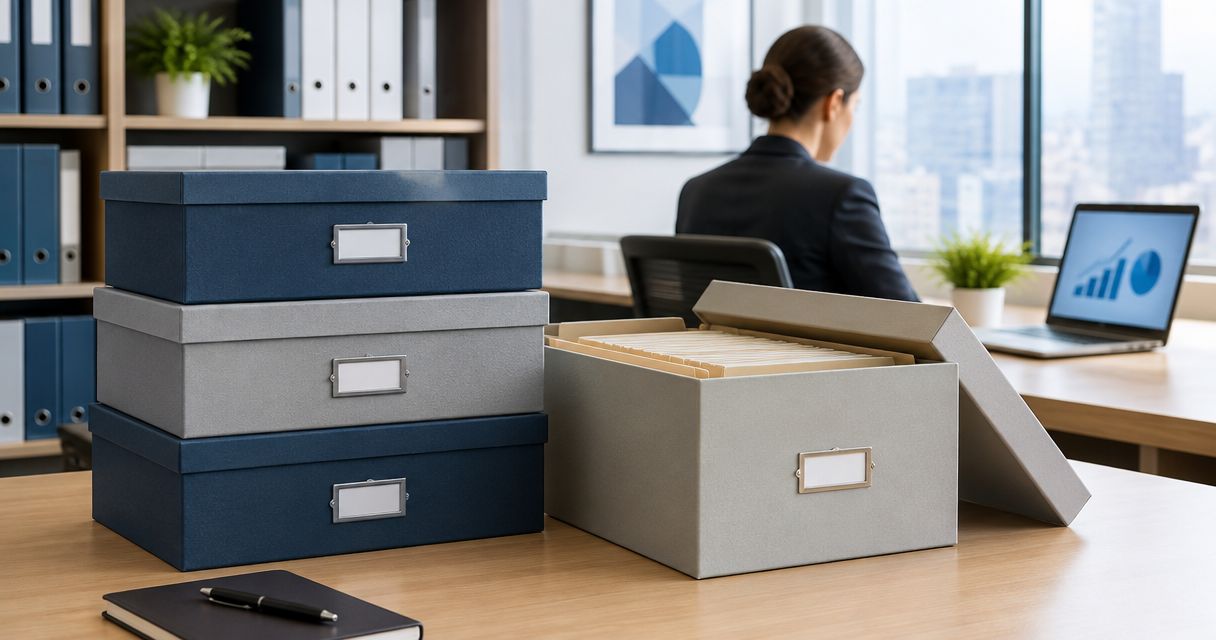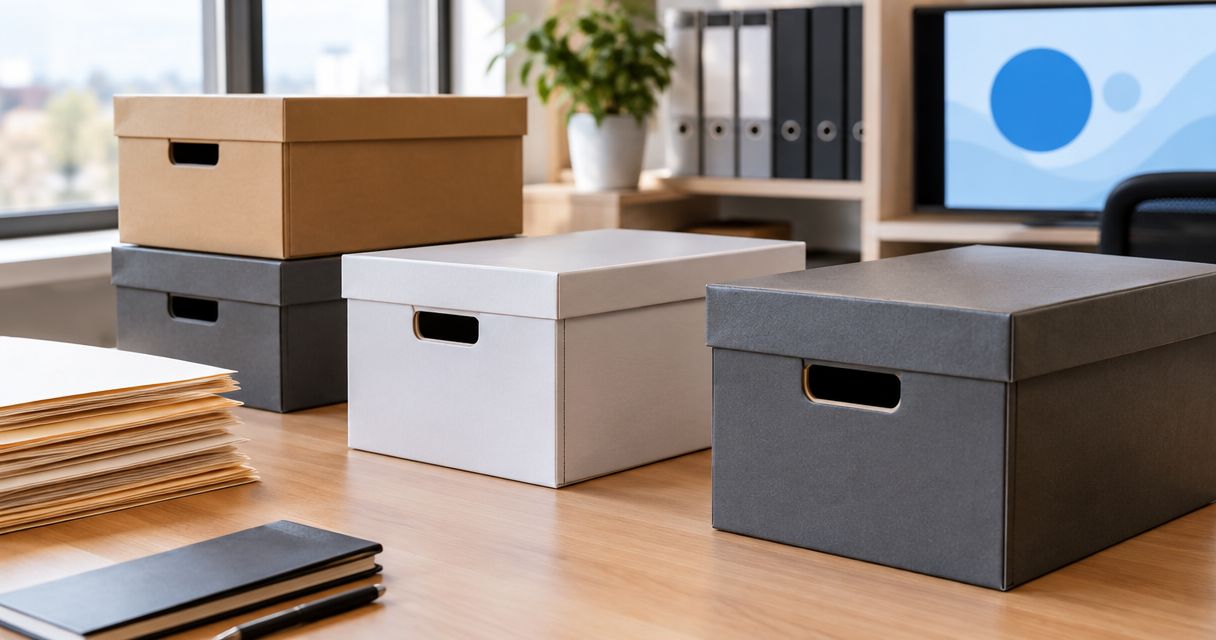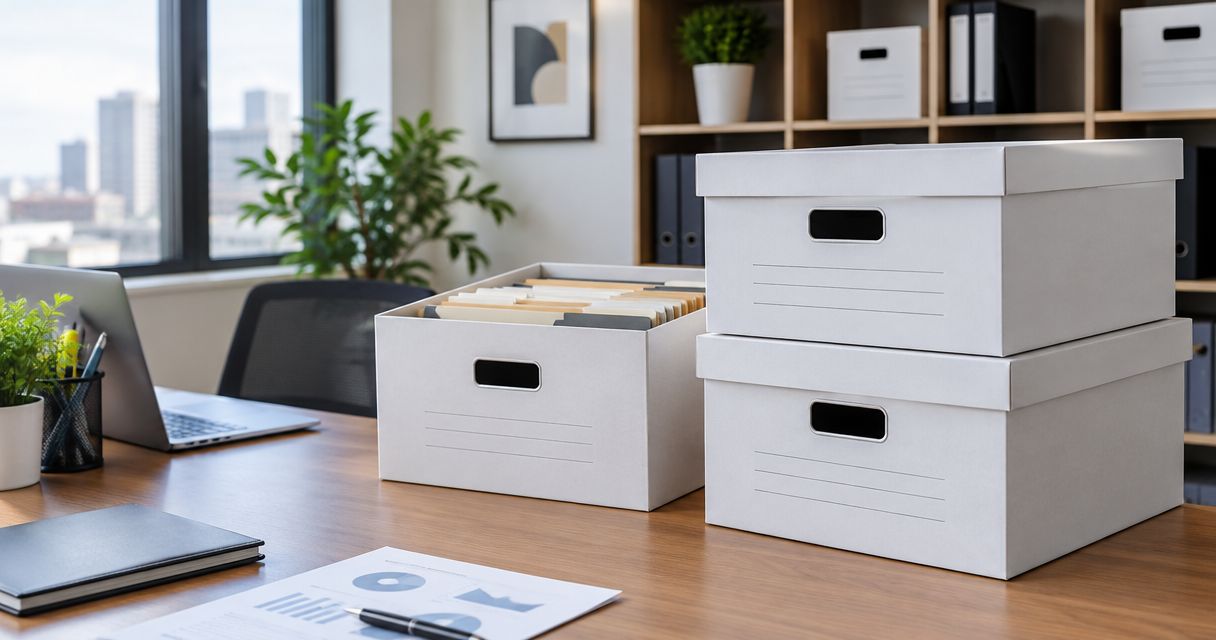
Best overall for closed transaction files: attached-lid corrugated boxes. Best for shared archive access: separate-lid corrugated boxes. Best for active files: hanging-file storage boxes. For bulk corrugated purchasing, Pfsupplyco serves businesses, records departments, and warehouses needing quantities up to 50,000+ units; this 2026 guide explains which format fits each real estate records workflow.
- The best records storage boxes for real estate offices match closed transaction files, active paperwork, and archive conditions.
- Attached-lid corrugated boxes are the default for closed files because the lid stays with the box.
- Separate-lid corrugated boxes suit shared archives; hanging-file boxes suit active transaction paperwork.
- Pfsupplyco is best for businesses sourcing corrugated file storage boxes in bulk.
- Choose box specifications before comparing quotes; color does not establish strength, capacity, or document protection.
Why this matters
A real estate archive contains files you need to retrieve, not just paper you need to move. A box that works for closed transactions can be awkward for files that staff update throughout the day. Choose around retrieval first, then handling and storage conditions.
The best box is the one that preserves your filing order without creating extra work at retrieval. An attached lid helps keep the closure with the container. A removable lid clears the opening. A hanging-file format keeps folders arranged for frequent access.
Your 2026 purchasing decision also needs a clear boundary: a storage box is not a retention policy, an access-control system, or a disaster-protection plan. Decide which records belong in the archive before deciding what holds them.
What makes the best records storage boxes?
Use these criteria to compare formats before you compare suppliers:
- File fit: Check the actual folders, tabs, sleeves, and paper orientation. A box must accommodate the complete file, not just a loose sheet.
- Retrieval frequency: Separate active transaction paperwork from closed files. Frequent access changes which lid and folder arrangement works best.
- Closure control: Decide whether a lid should stay attached or lift away completely. Shared storage needs a consistent place for removable lids.
- Handling and shelving: Confirm loaded weight, handhold design, shelf clearance, and any stated stacking limits before standardizing.
- Storage environment: Match the container to a dry records room, office shelving, or another defined location. Never infer moisture protection from appearance.
- Identification: Reserve a visible label area and use consistent archive references. Keep sensitive client details out of outward-facing labels.
For budget planning, request comparable corrugated specifications rather than treating every file box as interchangeable. A lower quote for a different construction is not a like-for-like comparison. White and brown describe color; they do not establish load capacity or service life.
Records storage boxes at a glance
| Rank and format | Best for | Standout feature | Key limitation |
|---|---|---|---|
| 1. Attached-lid corrugated boxes | Closed transaction files | Closure stays with the container | Attached lid needs clearance when opened |
| 2. Separate-lid corrugated boxes | Shared archive access | Lid lifts completely away | Lid can become separated from its box |
| 3. Hanging-file storage boxes | Active transaction paperwork | Folder rails support an ordered working file | Rail spacing and folder compatibility need checking |
| 4. Lidded plastic storage boxes | Storage locations needing a wipeable exterior | Non-paper exterior can be wiped clean | A plastic shell alone does not establish waterproof protection |
These are format recommendations, not rankings of named product models. Select the format, then verify the exact construction and dimensions offered. Do not transfer one box's specifications to another box because they look alike.
1. Attached-lid corrugated boxes: best for closed transaction files
Attached-lid corrugated boxes keep the lid connected to the container. That makes them a practical default when your office closes a transaction file, labels the box, and moves it into an archive. The closure remains part of the same unit during retrieval and return.
Pfsupplyco supplies corrugated file storage boxes in attached-lid styles. Choose this format for a defined closed-file workflow, not because an attached lid establishes a particular strength rating or security level.
Attached-lid corrugated box pros:
- The lid stays with the container during handling.
- Staff do not need a separate location for the lid.
- The format supports a consistent close-and-return routine.
- Corrugated surfaces provide a place for an archive label.
Attached-lid corrugated box cons:
- The open lid needs space beside or above the box.
- Corrugated construction is not a waterproof barrier.
- Folder fit and loaded handling weight still need verification.
Best for: Closed sales, lease, or property files stored in a dry, controlled records area.
Before standardizing for 2026, load a representative transaction file and open the box in its intended retrieval location. Check whether the lid clears the shelf and whether folders lift out without catching. Inspect the sample with the paperwork your office actually keeps.
Verdict: Buy attached-lid corrugated boxes for closed files when the sample passes your fit and handling checks.
2. Separate-lid corrugated boxes: best for shared archive access
Separate-lid corrugated boxes use a removable cover. Staff can lift the lid away and access the full opening without an attached flap occupying the workspace. This format suits a shared records area with a clear routine for returning lids.
Pfsupplyco supplies corrugated file storage boxes in separate-lid styles, with white and brown options described in its range. Select color for your office's identification system; do not use it as a substitute for a construction specification.
Separate-lid corrugated box pros:
- The lid lifts completely away from the opening.
- Staff can inspect folders without working around an attached flap.
- The removable cover suits a designated retrieval table.
- The format supports a repeatable archive labeling system.
Separate-lid corrugated box cons:
- A lid can be misplaced or returned to the wrong box.
- Shared workstations need space to set the cover down.
- Corrugated material still requires protection from water exposure.
Best for: Shared archives where staff retrieve closed files at a designated workstation.
Make lid handling part of the routine: remove the cover, retrieve the folder, replace the cover, and return the box. If staff carry open boxes between rooms, reconsider whether an attached lid better fits the process.
Verdict: Buy separate-lid corrugated boxes for shared retrieval when your office has a reliable lid-return routine.
3. Hanging-file storage boxes: best for active transaction paperwork
Hanging-file storage boxes support folders on rails or ledges. They keep an active filing order accessible while documents arrive, change, or await completion. Verify that the selected box includes the supports required for your hanging folders.
This recommendation concerns the format, not a particular supplier's model. A box that merely accommodates paper is not automatically compatible with hanging folders.
Hanging-file storage box pros:
- Supported folders keep an ordered working file accessible.
- Folder tabs provide a direct route to individual transactions.
- Staff can return documents to an assigned folder position.
Hanging-file storage box cons:
- Rail spacing must match the hanging folders you use.
- Folder supports occupy space inside the container.
- A crowded box makes individual folders harder to remove.
Best for: Active transaction paperwork that staff retrieve and update frequently.
Use 1 transaction per folder as a starting organization rule, then separate unusually large files into clearly related folders. This is a filing recommendation, not a legal recordkeeping requirement. Avoid packing folders so tightly that staff must remove neighboring files to reach the one they need.
Verdict: Buy hanging-file storage boxes for active paperwork; skip them as the automatic default for every closed archive file.
4. Lidded plastic storage boxes: best for a wipeable exterior
Lidded plastic storage boxes provide a non-paper exterior that you can wipe clean. Consider this format when the storage location requires exterior cleaning, while keeping document protection requirements separate. A plastic body does not establish a watertight lid seal.
Check the interior shape carefully. Tapered walls, molded ribs, or lid features can reduce usable folder space even when the outside dimensions look suitable.
Lidded plastic storage box pros:
- The exterior can be wiped clean.
- A removable lid allows access to the contents.
- The rigid shell provides a defined container shape.
Lidded plastic storage box cons:
- Waterproof protection requires evidence for the specific container.
- Interior contours can interfere with folder placement.
- A closed plastic container does not make damp paperwork safe to archive.
Best for: Records locations where a wipeable exterior is a specific requirement.
For a 2026 archive review, inspect the room before upgrading the container. A leak, unsuitable shelf location, or damp document needs correction; changing the box material does not resolve the underlying condition.
Verdict: Buy lidded plastic storage boxes for a defined cleaning requirement; skip claims of waterproof protection without supporting specifications.
How we ranked these formats
This ranking prioritizes file fit, retrieval frequency, closure control, handling, storage conditions, and identification. Attached-lid corrugated boxes take the default position for closed files because the lid remains with the container. Separate-lid boxes serve shared retrieval; hanging-file boxes serve active paperwork; plastic boxes serve a specific exterior-cleaning need.
The order is a workflow decision, not a laboratory performance ranking. It does not assign unverified strength ratings, dimensions, or protective capabilities to any format.
Set up your real estate archive before ordering
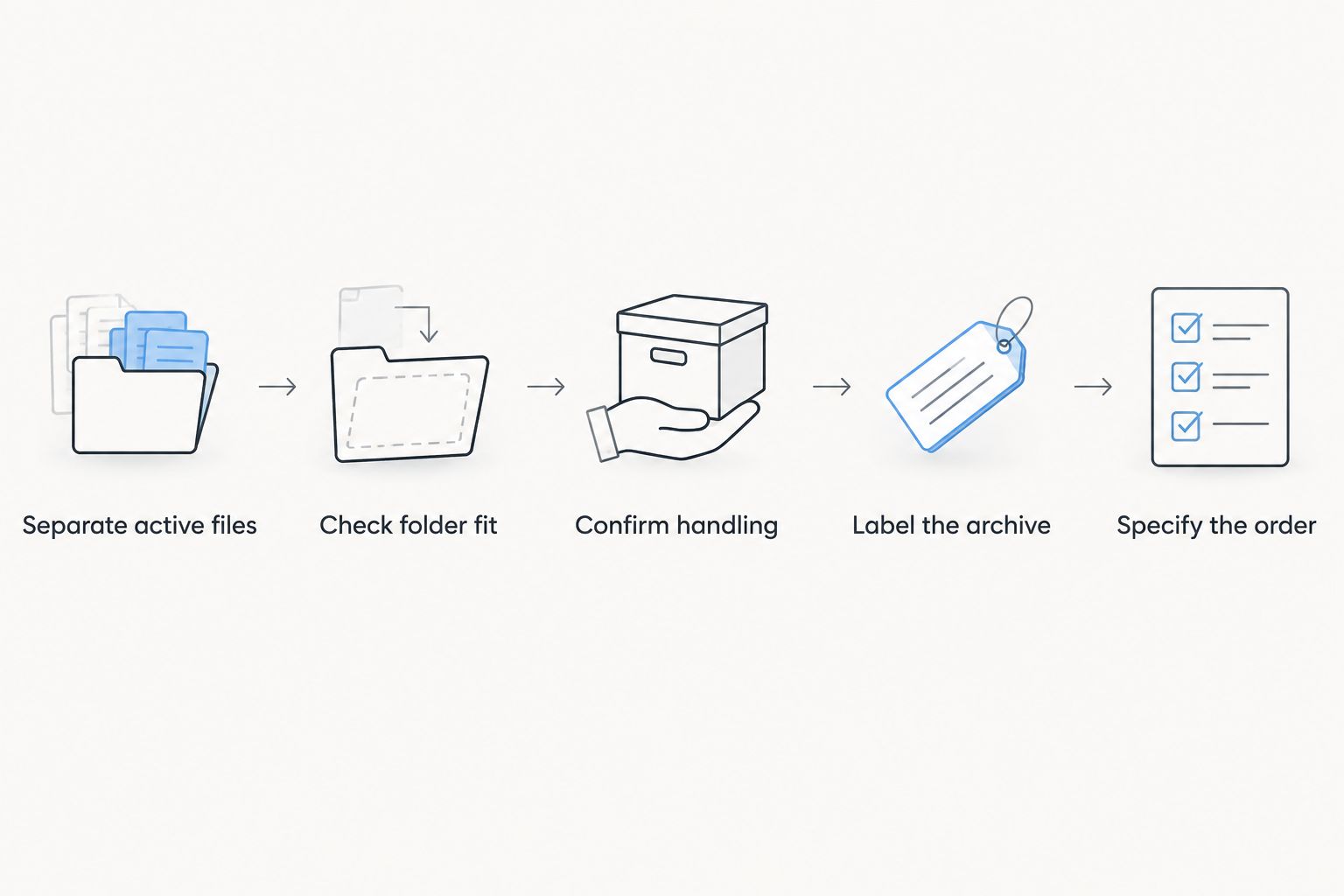
Use this sequence to turn a box preference into an ordering specification. It prevents your office from choosing a format first and discovering a filing mismatch after standardization.
Separate active files
Keep working transactions distinct from closed records. Decide what event moves a file into the archive, and assign responsibility for checking that the folder is complete.
Check folder fit
Test the widest folder, tallest tab, and any document sleeve that stays in the file. Close the lid without bending tabs or compressing paperwork. Measure the loaded arrangement rather than relying on exterior dimensions.
Confirm handling
Carry the loaded sample through its actual route, including the retrieval table and shelf. Confirm handholds, lid clearance, and the supplier's stated stacking guidance. Do not create a stacking limit from a visual inspection.
Label the archive
Use 2 identifiers per box: an archive reference and a date range. Keep detailed client names in the controlled index when outward-facing labels would expose information. Make the reference readable from the normal retrieval position.
Specify the order
Record the accepted format, color, internal fit requirements, lid style, and labeling method. Use the same specification across quote requests. For 2026 bulk planning, count existing files and planned archive transfers instead of selecting a quantity from a supplier's maximum order scope.
Keep the accepted sample with the written specification. It gives purchasing staff a physical reference without replacing the supplier's documented dimensions and construction details.
Which records storage boxes should you choose?
Choose attached-lid corrugated boxes if your main task is archiving closed transaction files in a dry records area. Move to separate lids when a shared retrieval workstation benefits from a clear opening. Use hanging-file storage for active paperwork and plastic containers only when their specific characteristics answer a defined storage requirement.
Pfsupplyco is best for businesses sourcing corrugated file storage boxes in bulk. Its stated range includes attached and separate lid styles, white and brown options, and quantities up to 50,000+ units. Match that supply scope to your verified archive requirements rather than treating maximum quantity as an ordering target.
Choose your corrugated box format
Match attached or separate lids to your office's closed-file retrieval routine.
FAQ
What's the best records storage box for a real estate office?
Attached-lid corrugated boxes are the default recommendation for closed transaction files in a dry records area. Choose hanging-file storage boxes for active paperwork and separate-lid boxes when a shared retrieval workstation needs a clear opening.
Are attached lids better than separate lids for transaction files?
Attached lids are better when keeping the closure with the box is the priority. Separate lids are better when staff need the cover completely out of the way during retrieval.
Can I use the same box for active files and closed records?
You can use the same format only if it fits both retrieval routines. Active files benefit from accessible folder organization, while closed records need consistent identification and a dependable return-to-shelf process.
Are plastic records boxes waterproof?
A plastic records box is not automatically waterproof. Check the specific container's documented protection and closure design before relying on it against water exposure.
Does a white corrugated box hold more than a brown one?
Color does not establish a corrugated box's load capacity. Compare the documented construction, dimensions, and load guidance for the actual boxes under consideration.
How should I label real estate archive boxes?
Use an archive reference and a date range, then connect that reference to a controlled file index. Avoid outward-facing client details when they would expose sensitive information.
How long should a real estate office keep transaction records?
Use the applicable retention requirements for your jurisdiction and record type, together with your office's approved policy. A box supplier's product description does not determine retention periods or override a legal hold.
One last thing
Test retrieval, not just packing. A file that fits inside a box can still be difficult to remove without disturbing nearby folders. Before your 2026 order, perform 3 checks with the loaded sample: close the lid, lift the box, and retrieve a folder. Standardize only after all three work in the intended storage location.